If your dryer vent exits through the roof rather than a wall, the usual reason is simply that there was no wall to use.
Why builders route it up
A dryer vent wants the shortest possible path to outside air. When the laundry closet sits against an exterior wall, that path is a few feet through the wall and done.
But laundry does not always sit on an outside wall. In plenty of South Florida floor plans it is in the middle of the house — off a hallway, tucked between bedrooms, or in an interior closet. In townhomes and condos it is often on an interior wall by necessity, because the units share the walls that would otherwise be available.
When there is no practical horizontal route, up is the remaining direction. Through the ceiling, into the attic or a chase, and out through a roof hood. That is ordinary construction rather than a corner cut.
What it costs you in practice
Three things follow from routing upward, and they are the reason roof-terminated lines come to us in worse condition than wall runs.
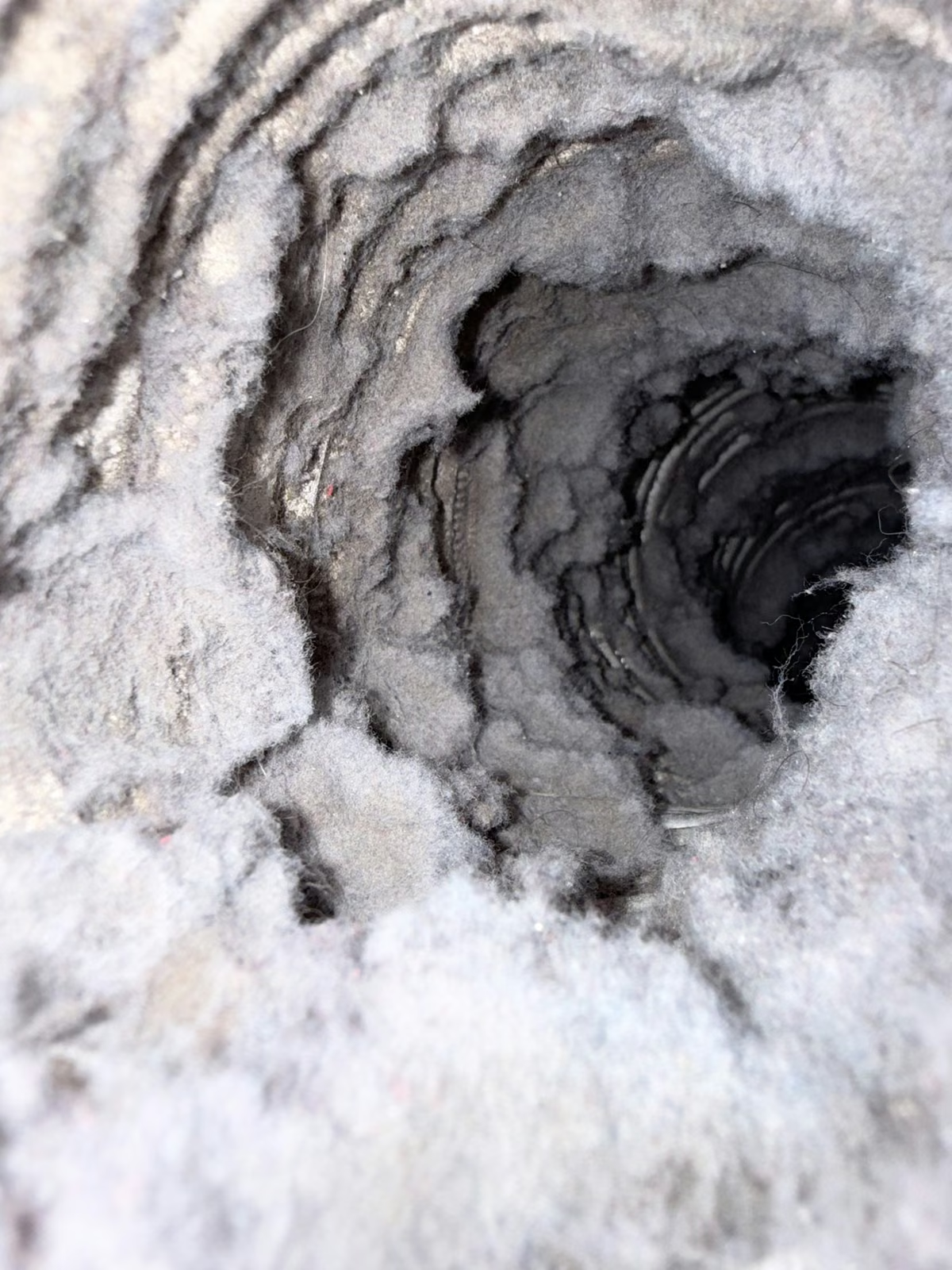
The run is longer. More duct means more interior surface for lint to settle on, and more opportunity for a restriction to develop somewhere you cannot see. Because you cannot see it, the signs of a clogged dryer vent are the only warning you get on a roof run — and they arrive earlier here than on a short wall run.
The dryer pushes uphill. Warm, moist, lint-laden air is being moved against gravity for the whole distance. Lint that would have carried straight out of a three-foot wall run has time to drop out of the airstream on the way up, especially at elbows and transitions.
Nobody looks at it. A wall hood is something you walk past. A hood on the roof is not, so the flap sticking or the exit packing up goes unnoticed until the laundry starts taking two cycles.
South Florida humidity compounds all three. Damp lint clings to duct walls far more readily than dry lint does, so the same load leaves more clinging buildup here than it would in a dry climate — and it does that along a longer, upward path.
A long upward run also has more places to fail outright. A separated joint at an elbow behaves nothing like buildup — the airflow never really recovers after a cleaning — and the two are worth telling apart before anyone quotes you for either.
What cleaning one actually involves
Both ends, and the roof end matters most.
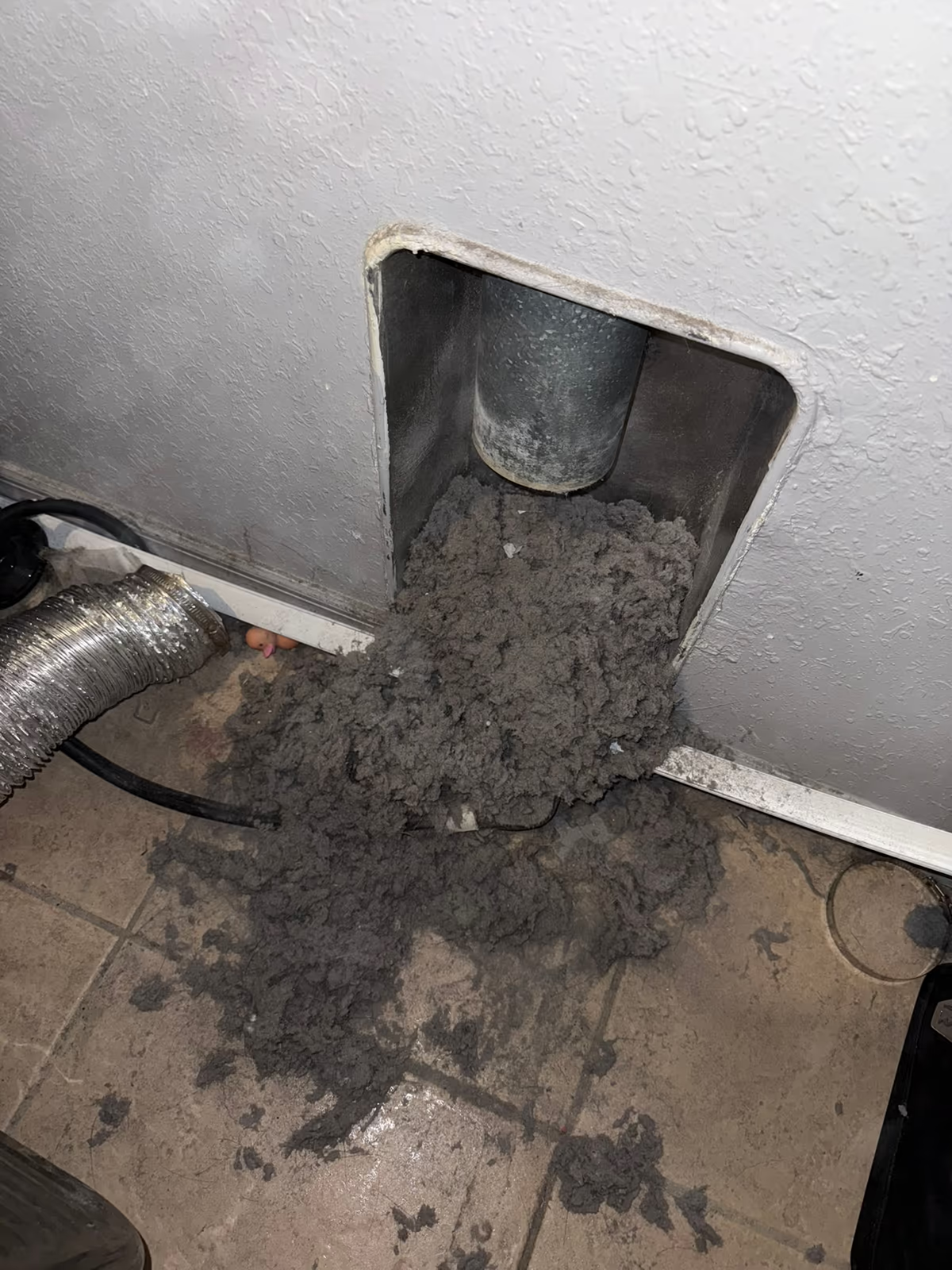
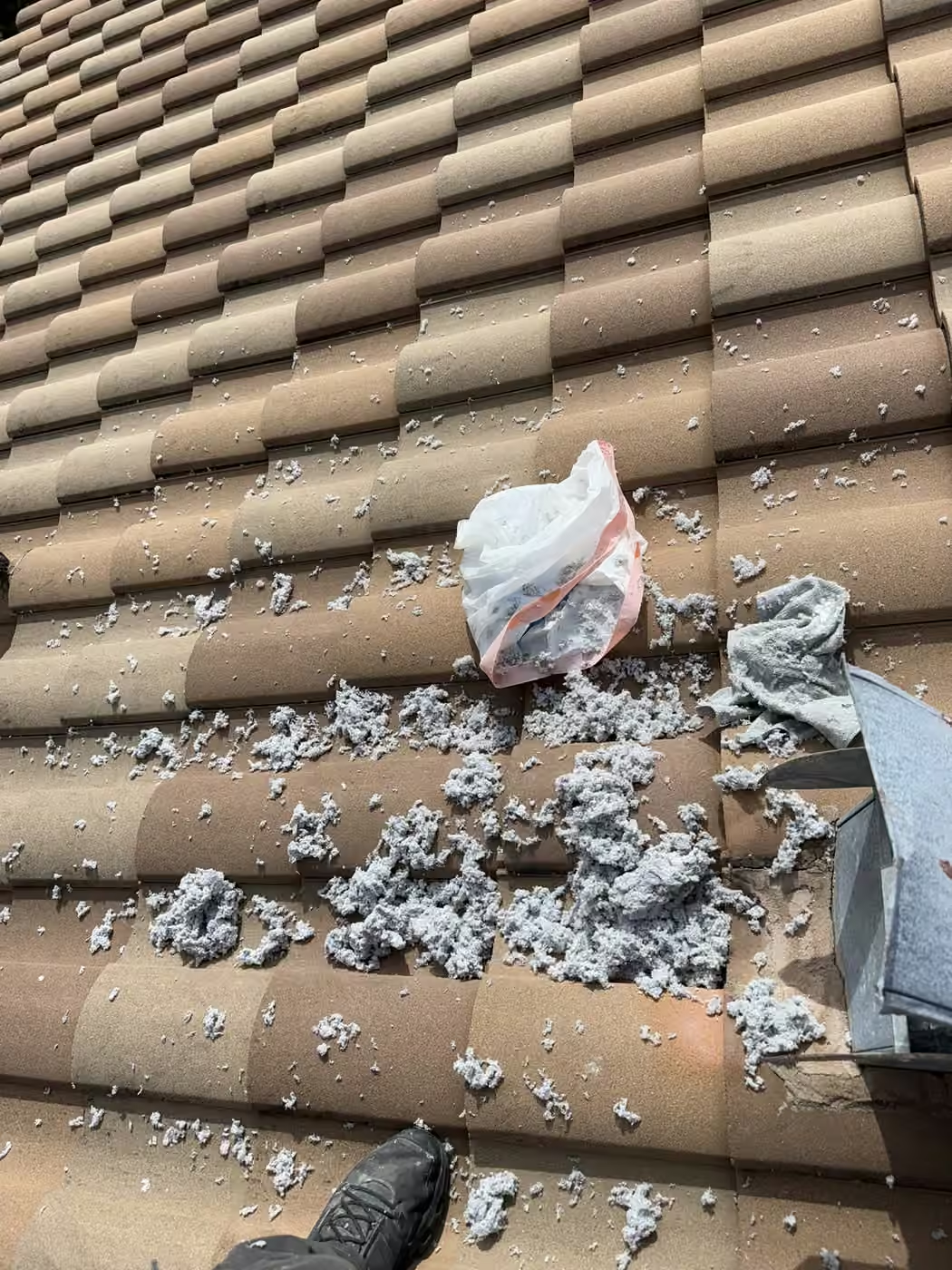
From inside, we pull the dryer, clear the transition duct behind it, and run rotating brushes with airflow up the run. From the roof, we work the termination back down the line, clear the hood itself, and verify real airflow at the exit before calling the job done.
The reason for doing both is straightforward: brushing only from inside tends to push a packed plug further up the line rather than remove it, and it never touches the hood — which is exactly where flaps stick and debris collects. A line that was "cleaned" from the laundry closet alone can still be restricted at the top.
We also look at the hood while we are up there. A flap that no longer opens fully, a hood full of lint, or a screen matted shut are all common and all fixable.
The screen question
People often ask about adding mesh to keep animals out. It is a genuine trade-off rather than an obvious upgrade.
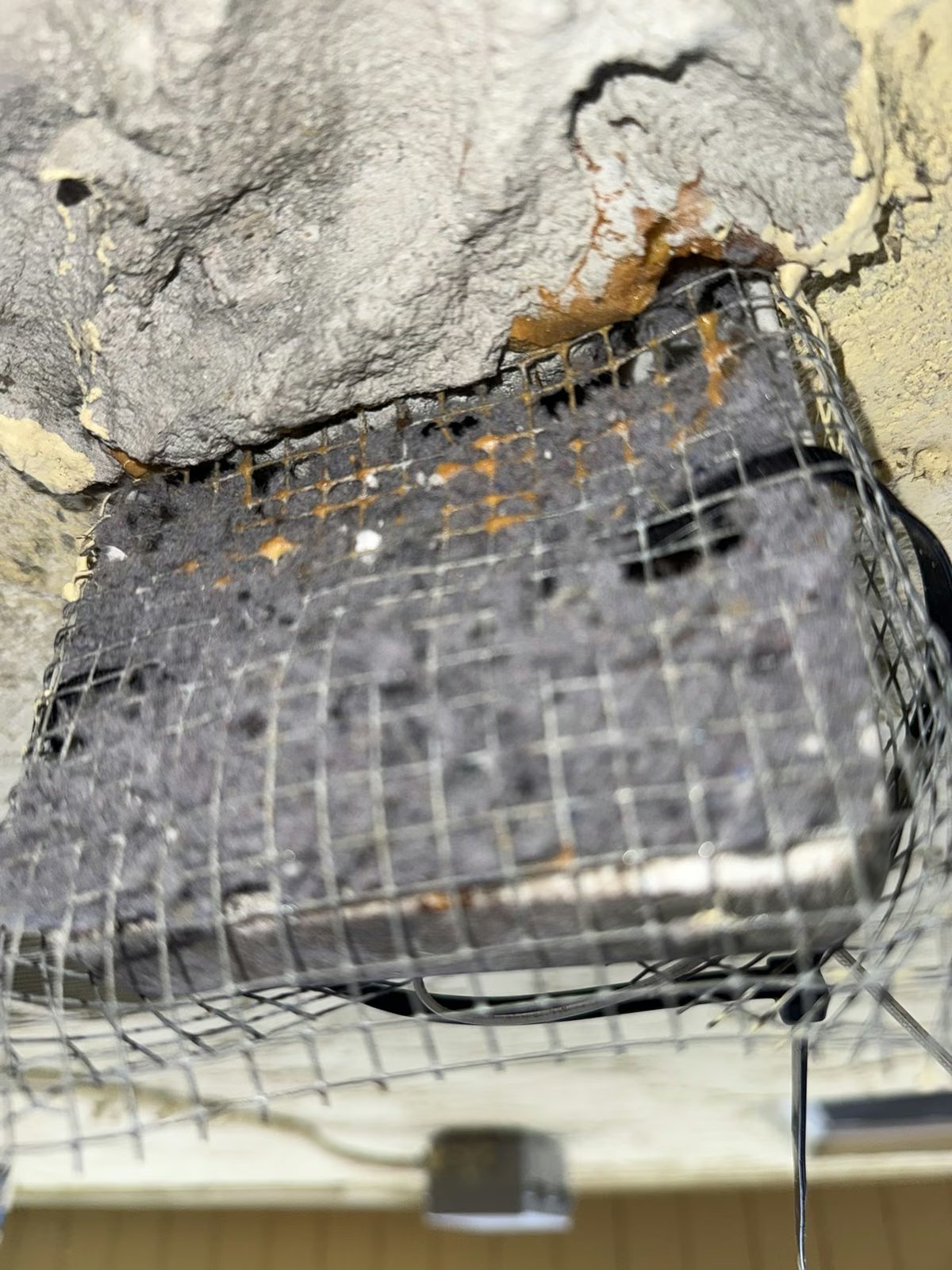
A screen keeps pests out and catches lint. Caught lint is the thing that blocks your line. The Florida Building Code prohibits screens at the termination of shared multistory dryer systems for precisely that reason, and a matted screen is one of the more common blockages we pull apart.
On a single-family roof vent, a proper hood with a working flap is the better answer. It closes when the dryer is off and opens freely when it runs. If a hood has lost its flap or the flap has stiffened with age, repairing that does more good than putting mesh in front of it.
While we are up there
Roof penetrations depend on their flashing to shed water, and South Florida sun and driving rain are hard on flashing and sealant. If you have a ceiling stain near where the vent runs, the penetration is worth considering as a source.
We are duct people, not roofers. What we will do is tell you what we saw with a photo. If the flashing looks compromised, that is a roofer's call and we will say so rather than work around it.
If your run goes up
Mention it when you book. Roof-terminated and long runs need roof access and the right equipment, and they are the jobs some companies quietly decline — which is part of why they go years without being touched.
We clean, repair and install dryer vents across Miami-Dade, Broward and Palm Beach, including roof-terminated lines and long condo runs. What the work involves is on our dryer vent cleaning page, with real photos from recent jobs. The inspection is free, and you will see what came out of your line rather than take our word for it.