If you live in a condo or townhome and your clothes have started needing two cycles, there is a question worth answering before you pay anybody: is this your vent line, or the building's?
The answer depends on one thing
South Florida buildings use two very different dryer venting designs, and which one you have decides everything else.
Individual runs. Each unit has its own duct from the dryer to its own termination on an outside wall or the roof. Nothing is shared. Your neighbour's blocked line has no effect on yours, and yours has no effect on theirs.
A shared multistory shaft. One vertical duct runs up through the building and every unit on the stack connects into it. All the laundry exhaust in that column of apartments travels the same duct. A restriction in it is genuinely a shared problem.
Both are normal. The second one is not some builder shortcut — the Florida Building Code has a section written specifically for it.
What the code says about shared shafts
Section 504.11 of the Florida Building Code, Mechanical, covers the case where "a common multistory duct system is designed and installed to convey exhaust from multiple clothes dryers." Its requirements are worth reading, because they amount to a list of reasons a shared shaft is unforgiving:
- No dampers. The code states plainly that "dampers shall be prohibited in the exhaust duct." Anything that could obstruct flow is not allowed in there.
- The fan never stops. The exhaust fan "shall run continuously," and it has to be connected to a standby power source.
- The fan is alarmed. Its operation "shall be monitored" and must "initiate an audible or visual signal when the fan is not in operation." The code treats a stopped fan as an event somebody needs to be told about.
- A cleanout is built in. An opening "not less than 12 inches by 12 inches" is required at the base of the shaft "to provide access to the duct to allow for cleaning and inspection."
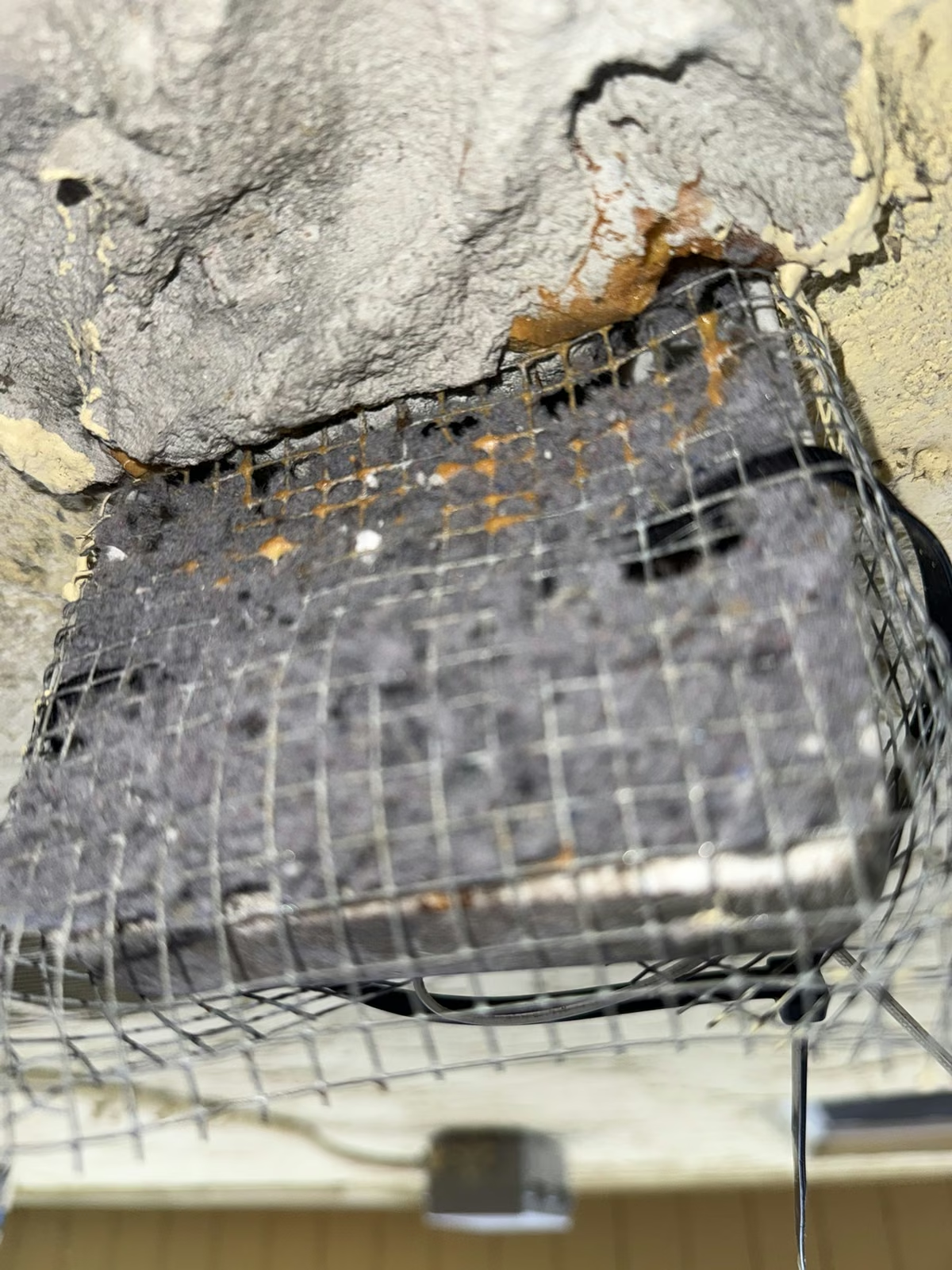
- No screens at the exit. "Screens shall not be installed at the termination," because a screen is the easiest place in the whole system for lint to bridge across and block.
- Rigid metal, no offsets. The duct inside the shaft has to be sheet steel and "designed and installed without offsets."
That last group is the tell. A system that requires a continuously running, alarmed fan and a purpose-built cleanout hatch is a system the code expects to accumulate lint and to need servicing. It is not designed to be ignored for a decade.
How to tell which building you are in
You do not need to open a wall. Ask the manager two things:
- Is there a booster fan on the laundry exhaust? A shared shaft has to have one. Individual runs generally do not.
- Is there a shaft cleanout? If somebody can point at a 12-by-12 access hatch at the bottom of a laundry stack, the shaft is shared.
Two yeses means shared, and it means the duct is the association's to maintain. Two nos, or a manager who has never heard of either, usually means individual runs — and then the line is yours.
What actually goes wrong
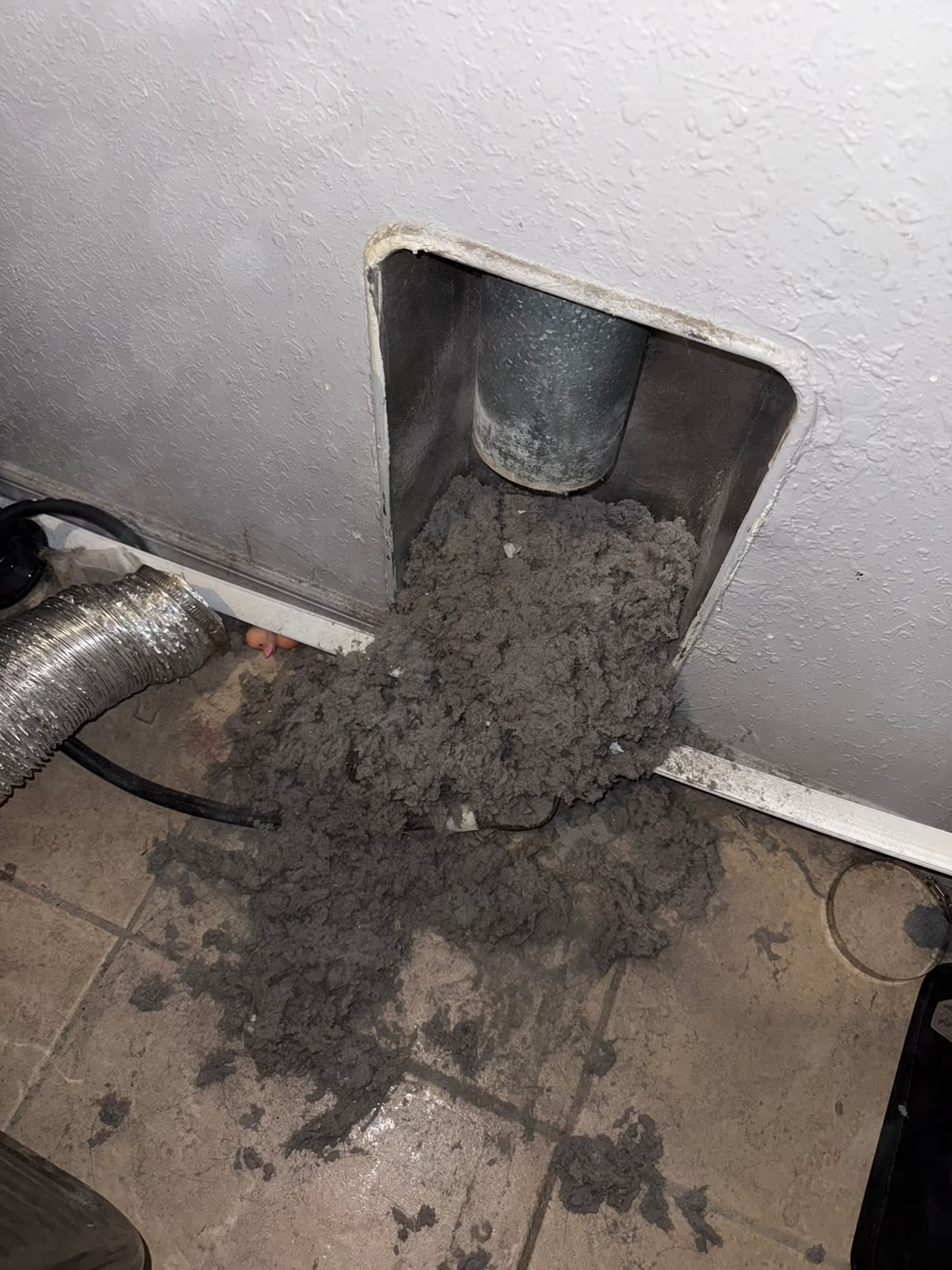
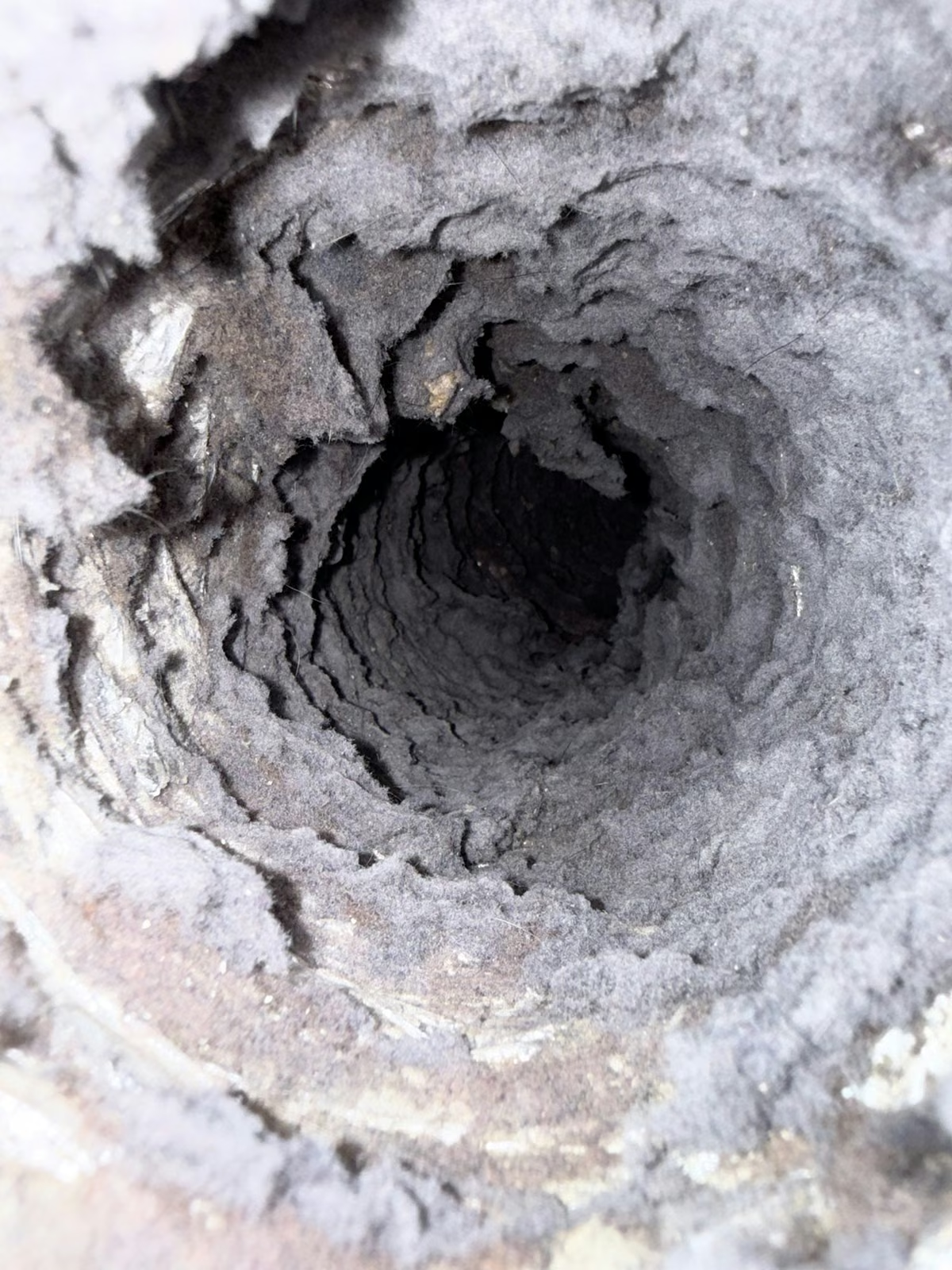
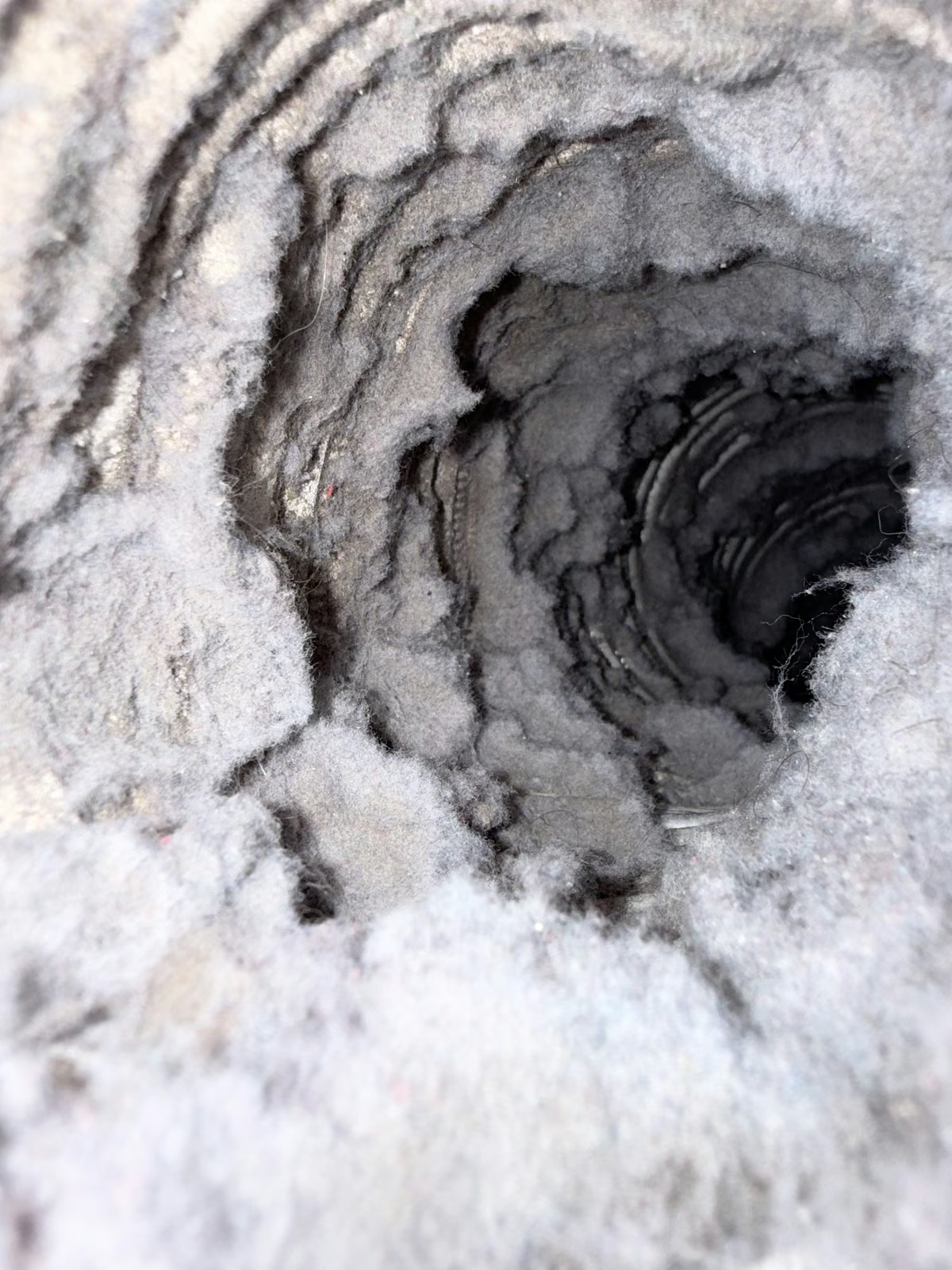
On a shared shaft, the failure mode is not lint blowing into your apartment. Air moves one direction and the continuous fan keeps it doing so. The failure is restriction: the shaft narrows, every dryer on the stack pushes against the same obstruction, and everybody's loads take longer. Because it happens gradually and to everyone at once, it tends to get read as "laundry is just slow here."
There is a second consequence worth naming. Lint is dry, loose and highly flammable, and in a shared shaft there is a lot of it in one place inside a structure shared by many households. That is the honest argument for raising it with a board, and it does not need a statistic attached to be true.
On individual runs, none of this crosses between units. Your line is yours, and if it is restricted the cause is in your own run — a crushed section, a long roof route, or years of accumulation. The signs of a clogged dryer vent will tell you whether that is what you are dealing with before you go looking for a building-wide cause.
What to do about it
If your clothes need two cycles and you are in a building, get your own section checked first. It is the part you control and it is often the whole answer. If clearing it changes nothing, you now have something concrete to take to the manager: the restriction is past the point where your line joins the common duct. Who is responsible for clearing that section is set by your declaration rather than by custom, and it is worth knowing which answer you are entitled to before you ask.
We clean and repair dryer vents across Miami-Dade, Broward and Palm Beach, individual runs and shared shafts both, including roof terminations and long condo routes. You can see what the work involves on our dryer vent cleaning page. If we find the problem is in a common element rather than your unit, you will get that in writing with photos, which is usually what a board needs before it acts.