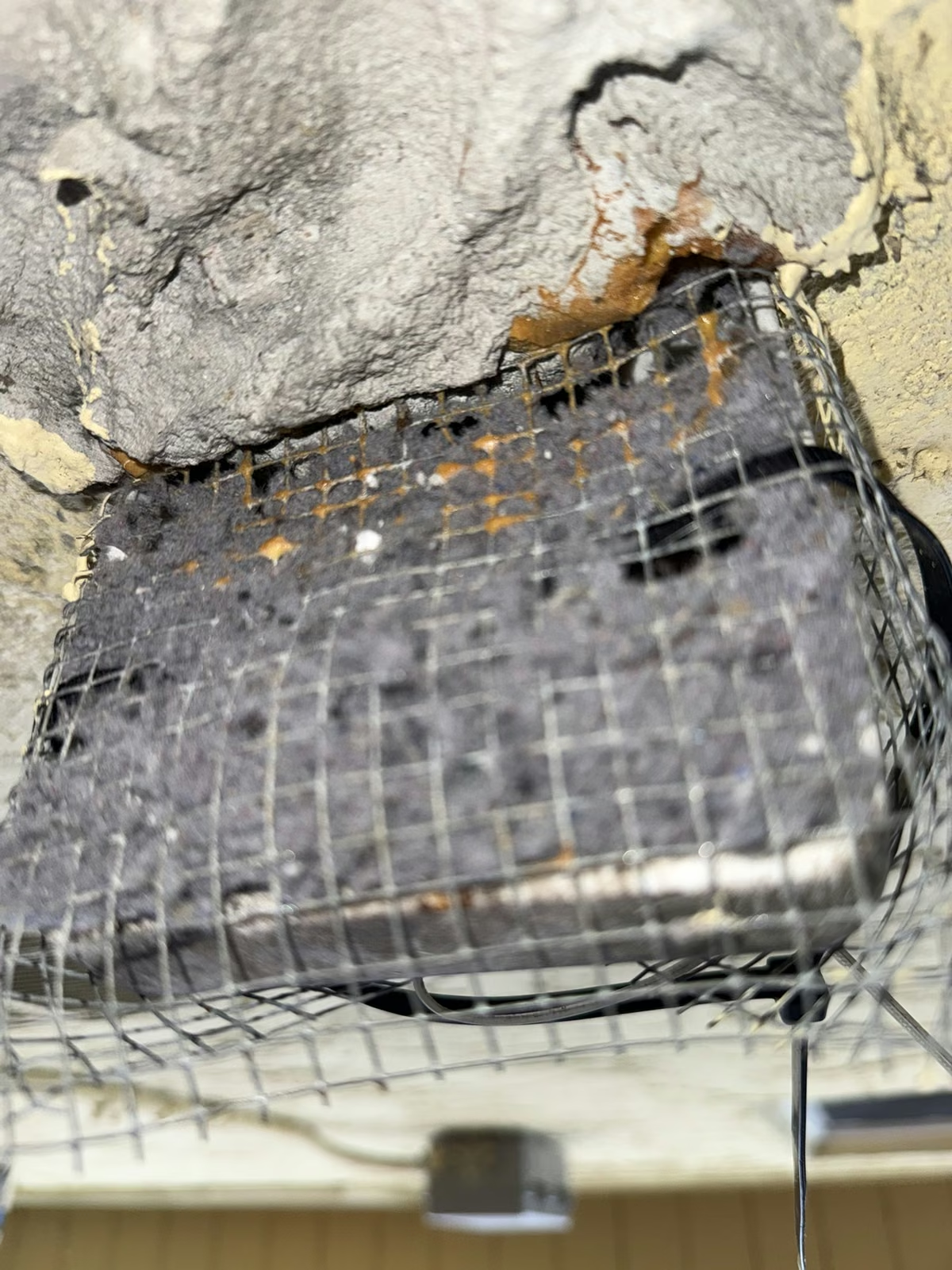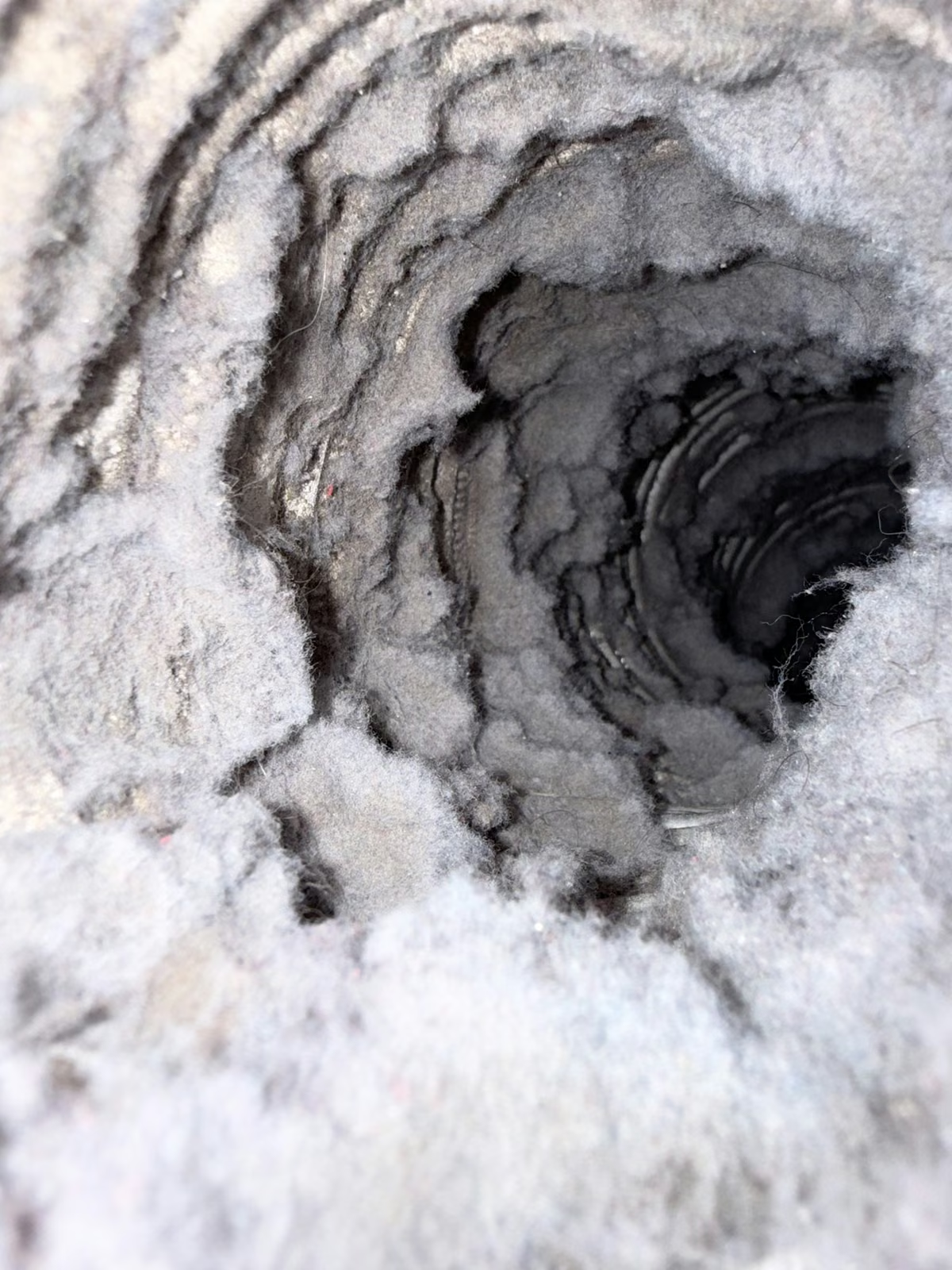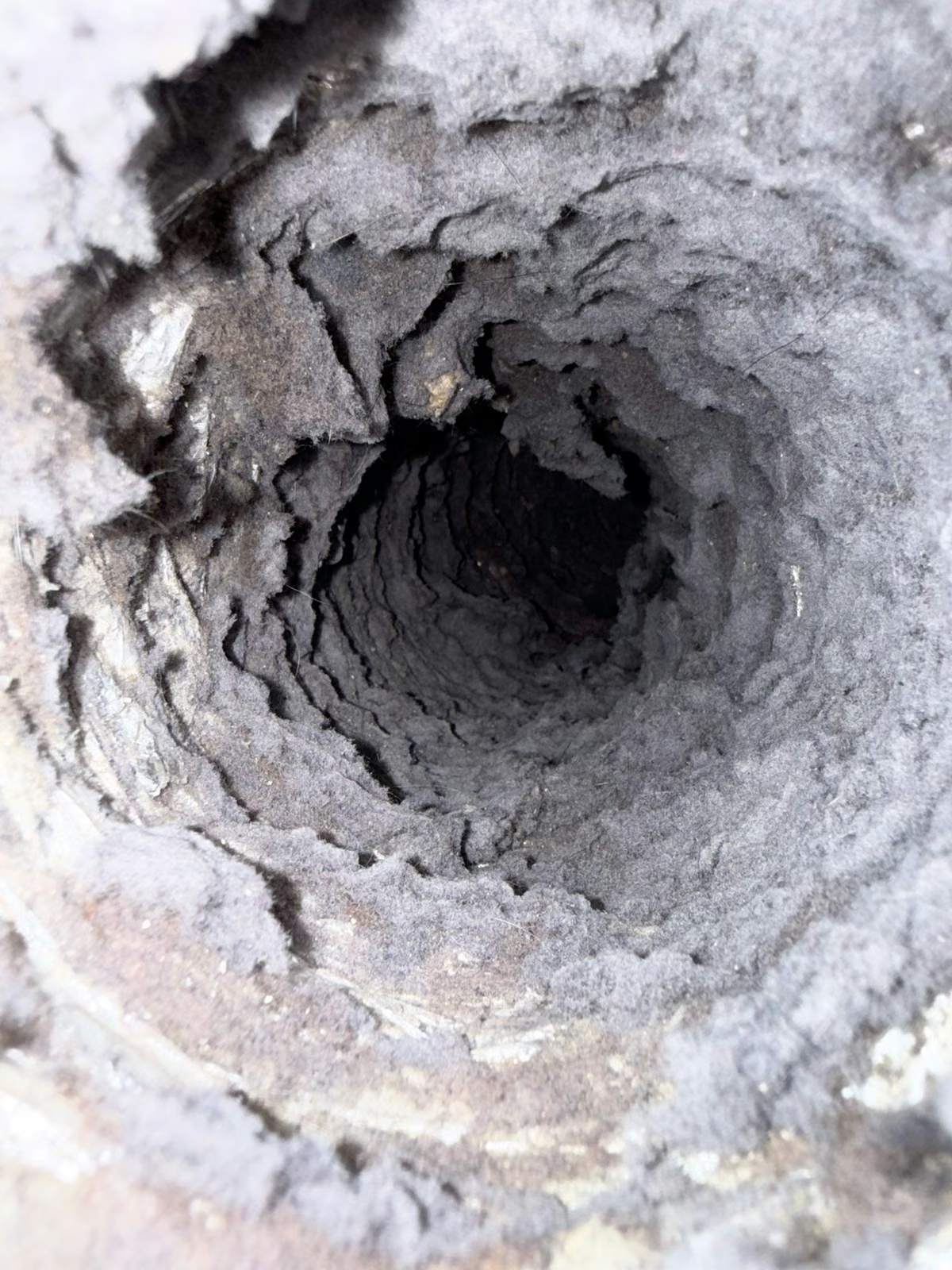
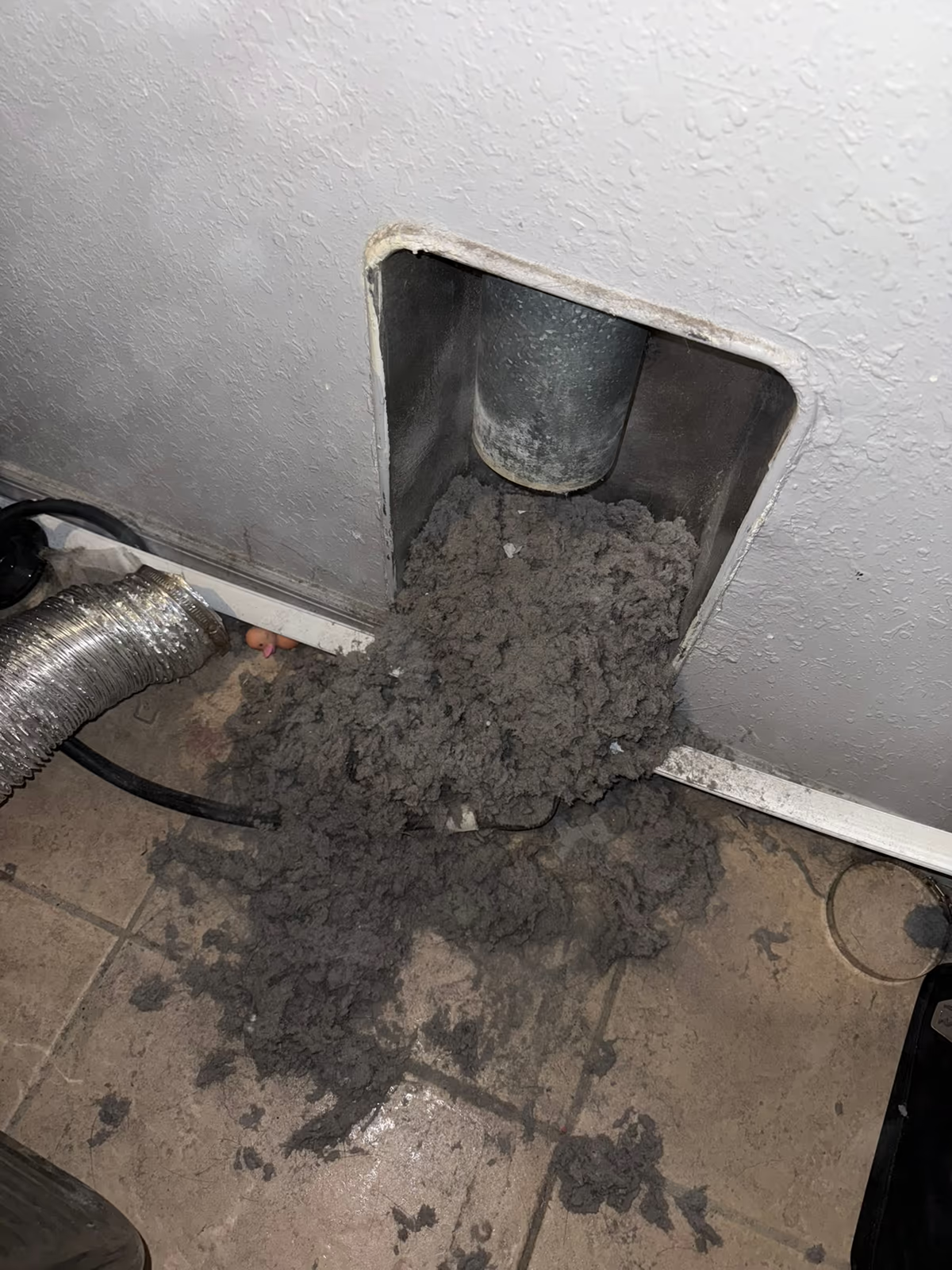
If you live in a South Florida condo and nobody has cleaned your dryer vent in years, this is usually why: everybody assumes it belongs to somebody else. Here is how the responsibility actually breaks down, and what to do when the answer is not obvious.
Who is responsible by default?
Florida law sets the starting point. Section 718.113(1) of the Florida Statutes reads:
Maintenance of the common elements is the responsibility of the association, except for any maintenance responsibility for limited common elements assigned to the unit owner by the declaration.
So the association maintains common elements unless your declaration of condominium hands a limited common element to you — and the same subsection expressly allows that, saying the declaration "may provide that certain limited common elements shall be maintained by those entitled to use" them.
In practice that usually lands as: the dryer, the transition duct behind it, and the run dedicated to your apartment are yours; a shared vertical shaft and its rooftop termination are the association's. But the statute points at your declaration, not at a rule of thumb, and declarations differ building to building.
How to read your declaration without reading all of it
Dryer vents are rarely named. Two sections carry the answer:
- The definition of a unit. Look for where the unit boundary sits — typically the interior surface of the perimeter walls. That tells you whether a duct inside a wall is inside your unit at all.
- Common elements and limited common elements. Look at how the declaration treats ducts, pipes, conduits and utility lines. Language along the lines of anything serving a single unit remains that unit owner's responsibility, wherever it runs is the sentence that most often settles it.
If both sections leave it genuinely unclear, that is the association's ambiguity to resolve in writing. Ask the manager for a written answer and keep it. It is worth ten minutes now and saves an argument later, especially if the line turns out to be damaged rather than just dirty.
Why "the building already cleans the ducts" does not cover you
Buildings that fund duct cleaning are almost always paying for shared HVAC risers and common-area systems — clear common elements. An individual dryer line serving one apartment sits outside that scope.
The result is a building that has had its ducts cleaned on a schedule for years while not one dryer line has been touched. If you have been in the unit a while and nobody has ever cleaned yours, that is the likely explanation, and the lint has had the whole time to accumulate.
What changes if you rent
Different document, different answer. For a rental the governing law is Florida's residential landlord and tenant act, Chapter 83 of the Florida Statutes, not the condo declaration. It puts maintenance of a rental's plumbing, heating and structural elements on the landlord, and an exhaust duct running through the building's structure belongs much closer to that category than to routine tenant upkeep.
Report it in writing to the landlord or property manager, keep a copy, and describe it as what it is — a fire-risk item, not a comfort complaint. If your lease hands appliance maintenance to you, that plausibly covers emptying the lint trap. It does not usually reach a duct inside a wall.
Why this matters more in a condo than a house
Three things stack up in a South Florida building, and they are the reason condo lines clog faster than the single-family ones a few streets away.
The runs are long. A house often vents through a nearby exterior wall in a few feet. A condo line can travel through interior walls, turn several corners, and terminate on the roof. Every elbow and every extra foot is another place for lint to catch.
Nobody owns the problem by default. In a house, one person notices the clothes taking two cycles and calls somebody. In a building, the same symptom gets absorbed into a general sense that laundry is slow here.
The consequence is shared. A restricted, lint-packed line in a building is not only your risk. That is the honest argument for getting it cleared regardless of who is technically responsible, and it is worth saying to a hesitant board.
If you are trying to work out whether one neighbour's blocked line can affect yours, or whether the fire risk in a shared building differs from a house, those are their own questions and worth answering separately. And if the line turns out to be damaged rather than simply dirty, that changes the question rather than answering it: repair and cleaning are different jobs, and which section failed is what decides whose bill it is.
What to do this week
- Search your declaration for duct, conduit and common element. Ten minutes.
- If it is unclear, email the manager and ask for the answer in writing.
- Book the cleaning either way if it has been more than a year — and mention up front if the run terminates on the roof, because that changes the access.
Not sure yours is due? The signs of a clogged dryer vent are the same in a condo as in a house — two cycles to dry a load, a hot cabinet, a humid laundry room — and they are what to look for before you raise it with anyone.
We handle condo and townhome runs across Miami-Dade, Broward and Palm Beach, including roof-terminated lines and the long runs some companies decline. You can see what the work involves on our dryer vent cleaning page. If the responsibility question is still unsettled when we arrive, we will tell you what we found and put it in writing with photos, which is usually what a board needs to see.
This page is general information, not legal advice. We clean dryer vents; we do not interpret condominium documents. Your declaration of condominium and your own lease govern your situation, and a Florida community association attorney is the right person to read them if a dispute is genuinely in play.