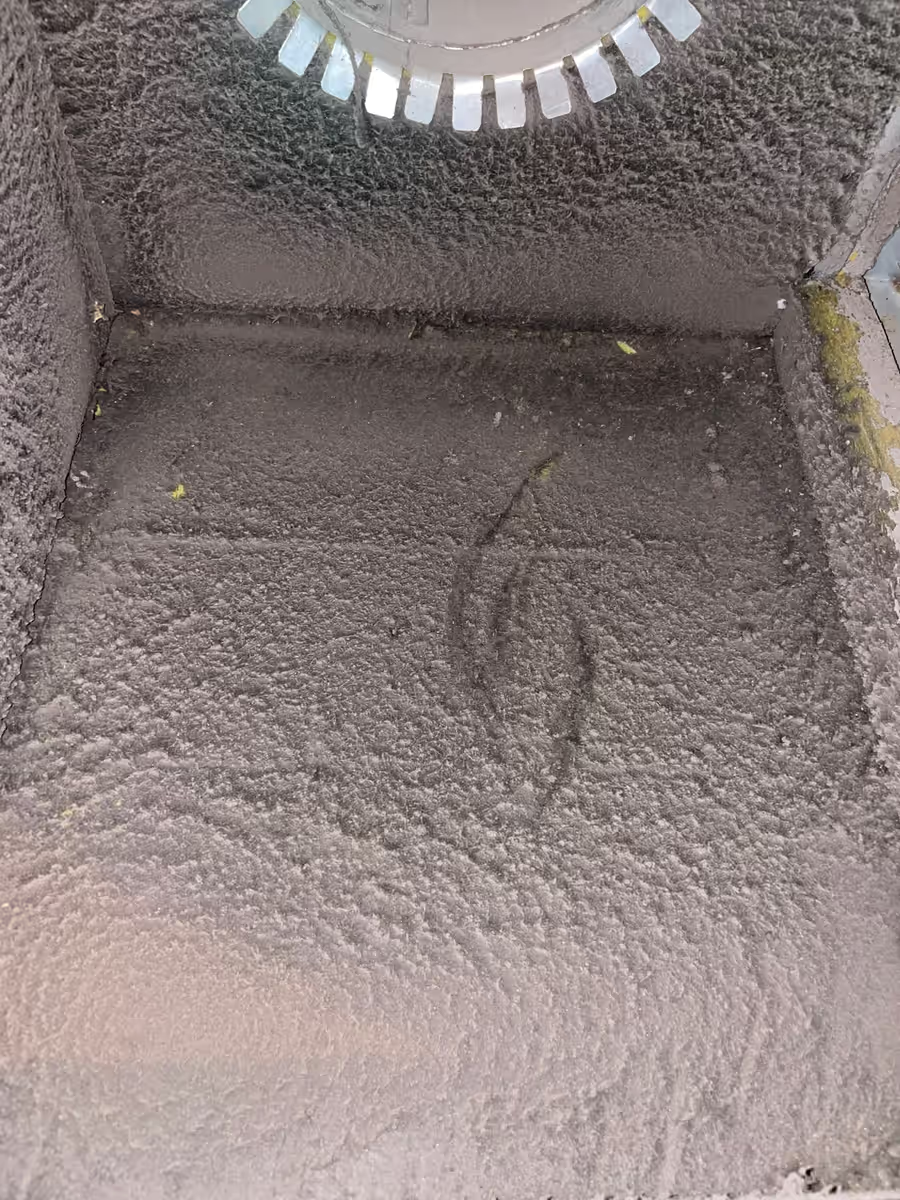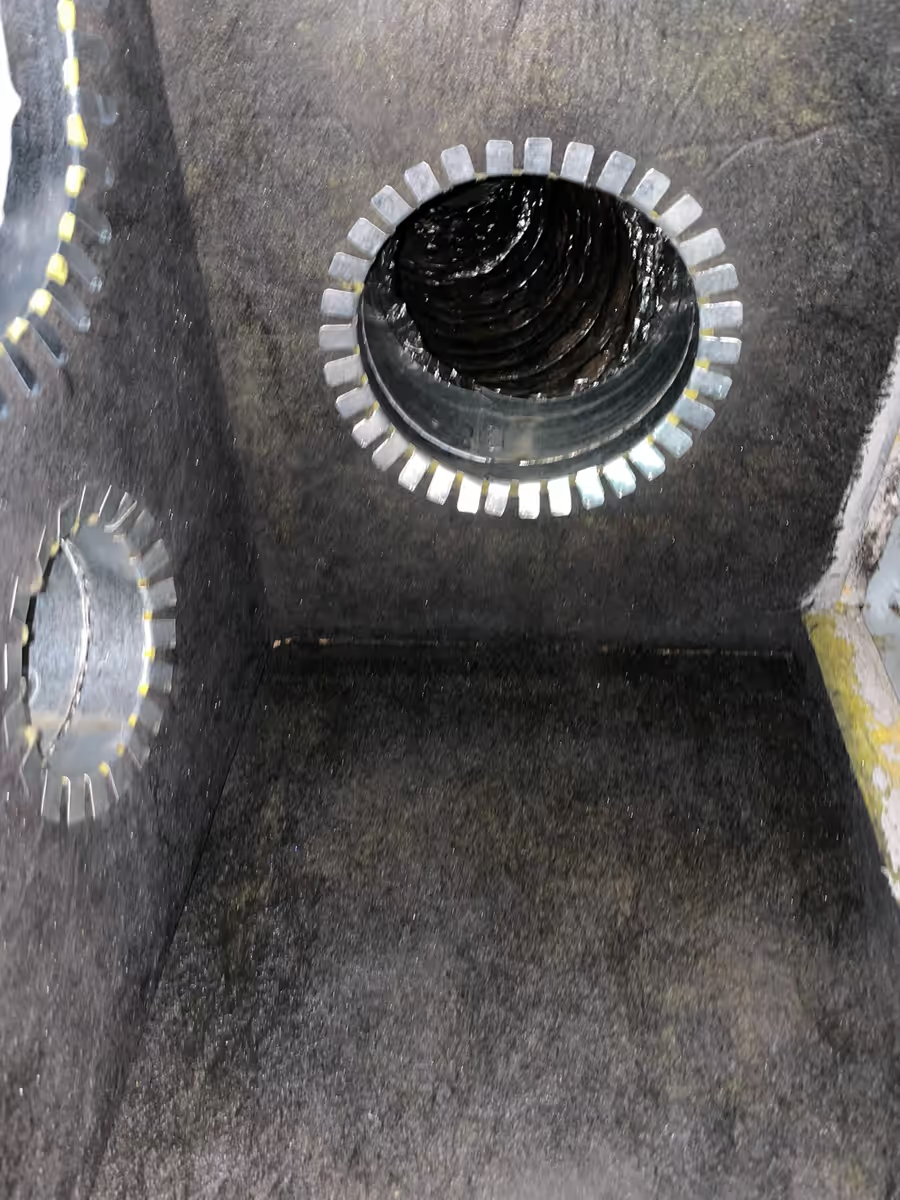
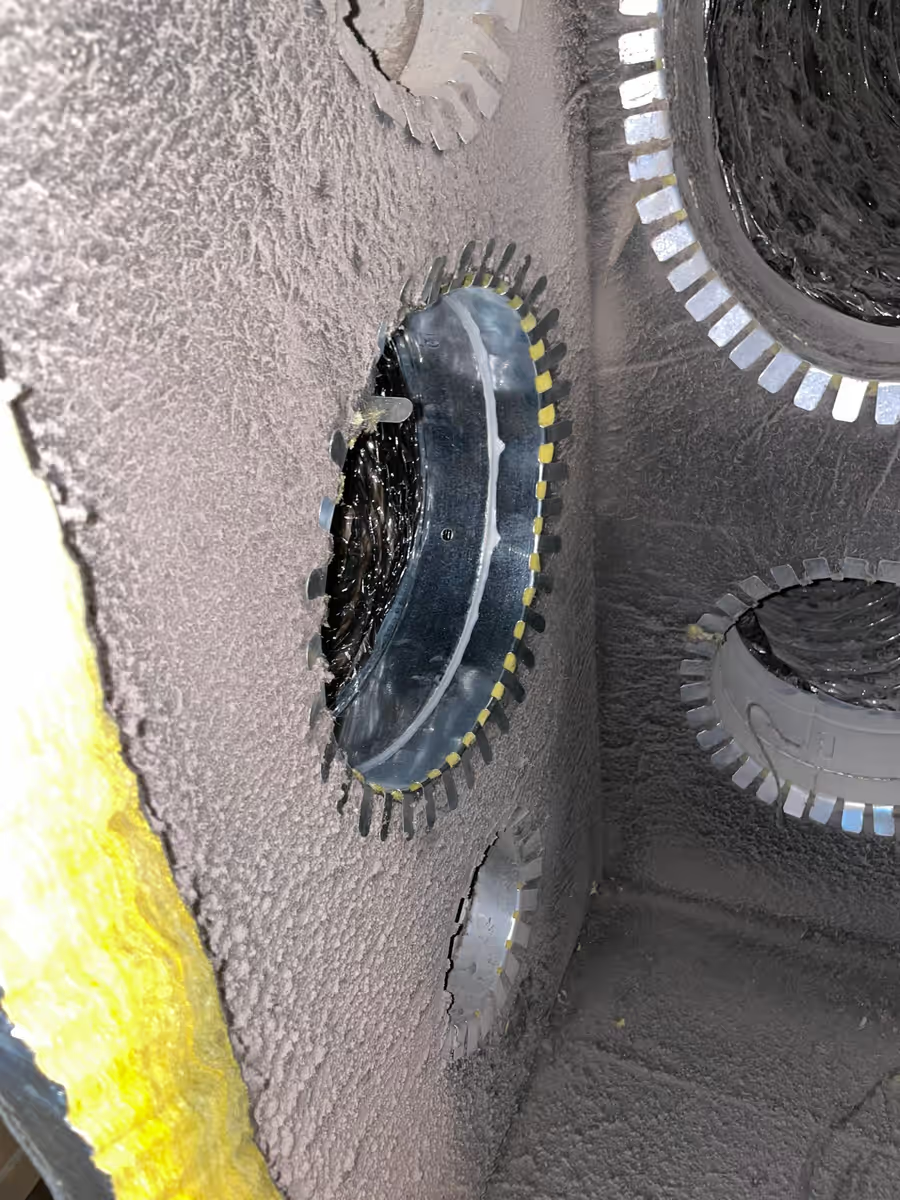
Black dust around your AC vents is nearly always one of three things: settled household dust, soot from candles or cooking, or mildew growing on the register itself where cold metal meets humid air. Rub a little between your fingers. Dry and smudgy points to dust or soot. Damp and speckled, clinging to the vent face, points to mildew.
That two-minute test matters more than it sounds, because the internet answers this question at two extremes and both are wrong. One half of the results tell you it is toxic black mold and you should panic. The other half tell you it is just candle soot and you should ignore it. In South Florida, either can be true, and they need completely different fixes.
The smudge test, and what each result means
Take a dry white cloth or a piece of paper towel to a vent that shows the buildup.
It smears into a grey-black streak. That is dust or soot. Soot is finer and greasier and tends to be worse near the kitchen or wherever candles burn. Household dust is drier and shows up fairly evenly across every supply vent in the house.
It comes off in flecks and the surface underneath feels damp. That is mildew growing on the register, not something being blown out of the ducts. The metal of a supply vent runs cold; the air in the room is humid; water condenses on the louvres, dust lands in it, and something starts growing in the film.
It is gritty and rust-coloured under the black. That is usually degraded duct board or insulation shedding, most often at the boot or the plenum rather than at the vent face.
The reason this distinction is worth two minutes is that only one of the three is actually about your ductwork.
Why the mildew answer is more likely in South Florida
Somewhere with dry summers, condensation on a vent face is unusual. Here it is close to routine, and it is a matter of physics rather than housekeeping.
Air conditioning runs most of the year, which means the supply registers stay cold for months at a stretch. The air meeting them carries a lot of moisture. Where a duct passes through a hot attic on the way to that register, the temperature difference is bigger still. Anywhere cold metal meets humid air for long enough, water appears — and dust that lands on a wet surface does not stay dust for long.
That is also why the same vents tend to be the offenders every year: the bathroom vent, the one at the end of a long attic run, the one in the room nobody closes the door on. They are not dirtier. They are colder, or wetter, or both.
If the buildup comes with a smell rather than just a mark, that is a different question with its own answer — see why your AC smells musty.
What actually fixes each one
For dust, start with the filter: the right size, seated properly, changed on the manufacturer's schedule rather than when it looks bad. Then check that the return is sealed. A return pulling air through a gap in a wall cavity or a closet is collecting whatever is in there and delivering it to every vent in the house.
For soot, the fix is at the source rather than the system. Candles, an unvented burner, a fireplace with a poor draw. Cleaning the ducts will not stop it coming back.
For mildew on the register, the fix is moisture. Bring indoor humidity down, make sure the duct feeding that vent is insulated where it runs through hot space, and keep the room's air moving rather than letting it sit against a cold louvre. Cleaning the register is the last step, not the first — clean it while the condensation is still happening and it will look the same in a month.
When it is worth opening the system up
A mark on a vent face is not, by itself, a reason to have your ducts cleaned. The EPA's guidance is to clean ducts when there is a reason to, rather than on a routine schedule, and a smudge that wipes off and stays off is not that reason.
It becomes a reason when the buildup is inside the system rather than on the outside of it. Pull a return grille and look at the first stretch of duct. Look at the blower compartment if you can reach it. Buildup that is coating the inside of the duct, the collars at the plenum, or the blower wheel is a different problem from a dusty register — and it is the one worth photographs before anyone quotes you anything. Ask to be shown your own system, not a brochure.
The same is true if the vents keep going black after you have cleaned them properly and dealt with the filter. Something is feeding it, and finding out what is the job — our air duct cleaning service starts with looking, and we would rather tell you the ducts are clean than clean clean ducts. If you are weighing up whether the work is worth doing at all, we wrote about that here, and how often it actually needs doing here.