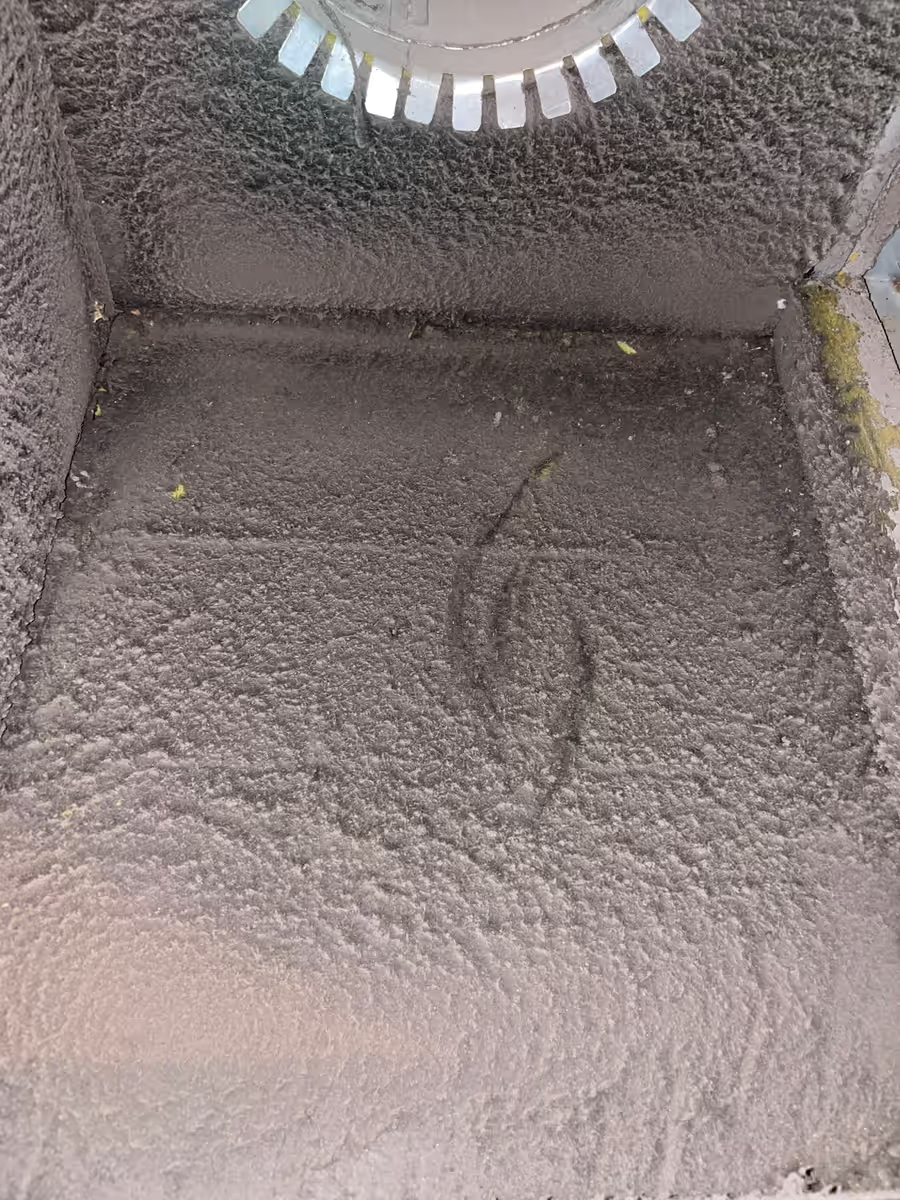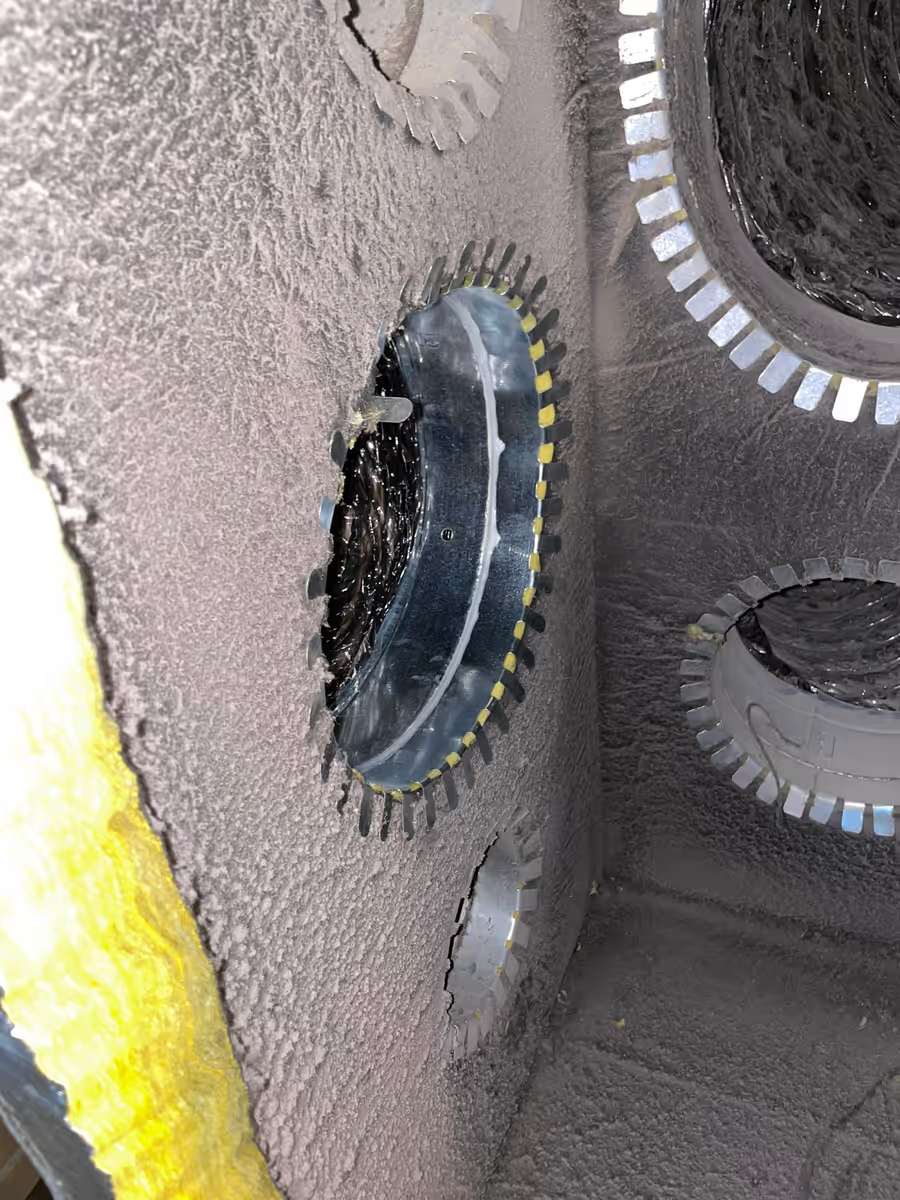
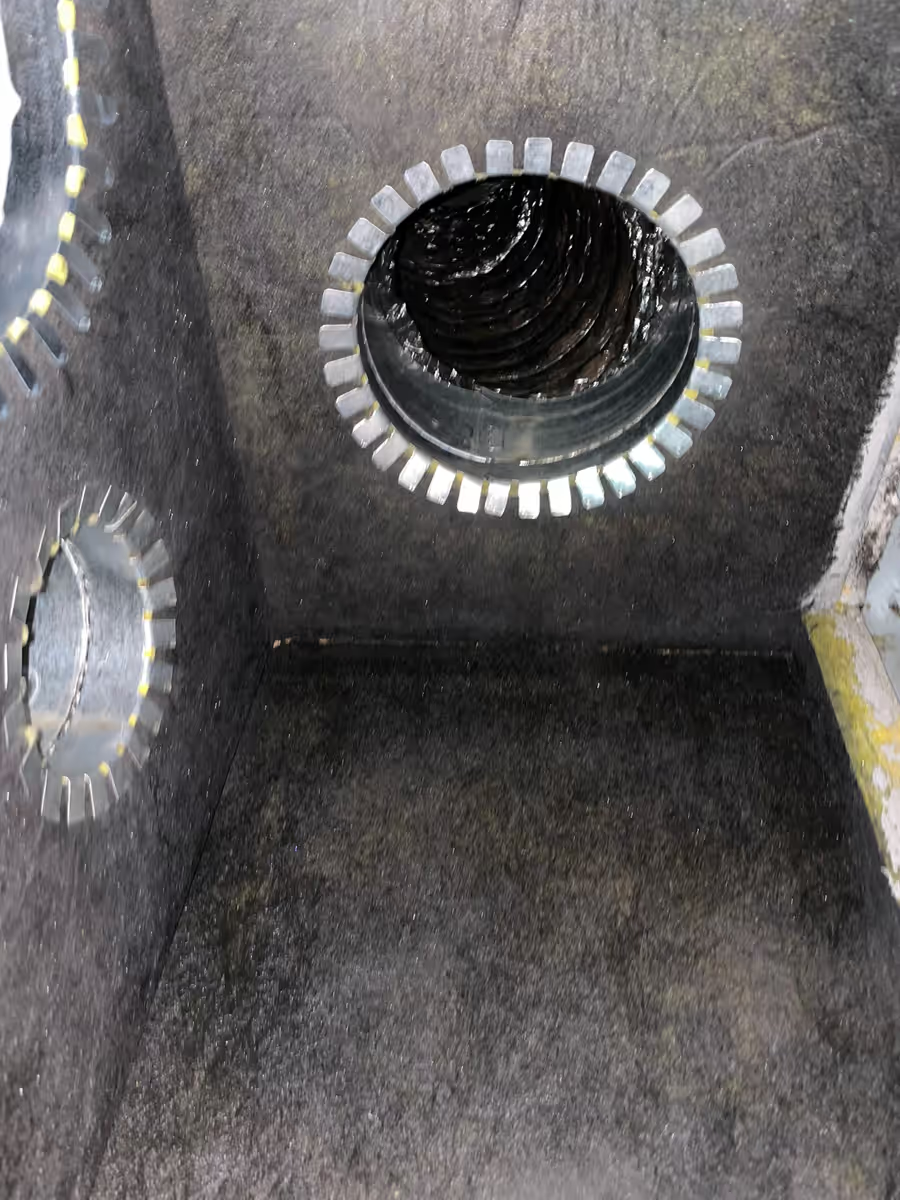
There is no fixed interval that is right for every South Florida home. The EPA does not recommend routine duct cleaning — only cleaning as needed. NADCA, the trade association most of those "every three to five years" articles are quoting, answers this same question with a list of factors rather than a number. Inspect yearly; clean when something gives you a reason.
That is a less satisfying answer than a date, so here is where the date came from and what to do instead.
Where "every three to five years" actually comes from
It is the most repeated number in this industry, and it is worth knowing that it is not what NADCA publishes for homeowners. Their own homeowner FAQ, under the heading How often should I get my air ducts cleaned?, answers it this way:
Frequency of cleaning depends on several factors, including smokers in the household, pets that shed high amounts of hair and dander, water contamination or damage to the home or HVAC system, residents with allergies or asthma, and homes that have just been renovated.
No interval. A list of conditions. The number that circulates online is a rule of thumb somebody built on top of that list, and it has been copied enough times to sound official.
What the EPA recommends
The EPA's guidance is blunter still: "EPA does not recommend that the air ducts be cleaned routinely, but only as needed." They are specific about what counts as needed, and we have written that part up separately — if what you are really asking is should I do this at all, read whether duct cleaning is worth it first and come back to the timing question afterwards.
This page is about the other half: given that it is condition-based, what does a South Florida homeowner actually put on a calendar?
Why this region compresses the interval
Two things make the answer here different from the answer in a seasonal climate.
The first is runtime. Air conditioning runs for most of the year in Miami-Dade, Broward and Palm Beach. A system that is moving air nine or ten months a year simply passes more air, and more of what is in that air, than one that sits idle through a long winter.
The second is water, and it matters more than the dust does. Water contamination or damage is on NADCA's own factor list, and in this climate it is not an unusual event — a backed-up condensate line, a roof leak, storm intrusion, or an attic that stays humid enough for long enough. The EPA is direct about what that does to ductwork:
If you have insulated air ducts and the insulation gets wet or moldy it cannot be effectively cleaned and should be removed and replaced.
Most homes here run insulated flex duct. So a moisture event does not shorten your cleaning interval — it can end that section of duct's life entirely. Waiting is a different kind of gamble here than it is somewhere dry.
What resets the clock
Any of these means stop counting years and look at the system:
- Water reached it. A drain line that backed up, a roof leak above the attic run, or standing water anywhere near the air handler.
- A musty smell every time the system starts. The smell is the symptom; the cause is usually inside.
- You have just renovated. Drywall dust ends up in ductwork reliably, and the system redistributes it for months.
- Pests. Rodents or insects in the ducts put droppings and nesting material directly in the airflow path.
- Heavy shedding pets, smokers, or someone in the house with asthma or allergies. These do not make cleaning urgent; they shorten the sensible gap between looks.
One more from the EPA, and it is the point most often skipped: "Prior to any cleaning, retrofitting, or replacing of your ducts, the cause or causes must be corrected or else the problem will likely recur." Cleaning a system without fixing what dirtied it buys you a few months.
Put an inspection on the calendar, not a cleaning
If you want a recurring date, make it a look rather than a job:
- Once a year, while the system is being serviced, have the return opened and the inside of the air handler and the first few feet of duct actually looked at. Ask to be shown photographs of your own system, not a brochure. That single habit answers the frequency question for your house permanently.
- Change filters on the manufacturer's schedule and keep the return sealed. Most of what ends up in a duct system got in through a gap.
- After any water event, inspect — do not wait for an interval to come around.
And if nobody has opened your system in five or more years, that is not a schedule. It is an unknown, and it is worth resolving before it becomes a replacement.
We do the looking part as air duct cleaning in Miami-Dade, Broward and Palm Beach: inspection first, photographs of what is actually in there, and a straight answer about whether cleaning it would change anything. Sometimes that answer is no.