Florida's landlord-tenant statute does not mention duct cleaning at all. The landlord owns and maintains the air handler and the ductwork, so a duct problem that breaks a building or health code is the landlord's to fix. Routine cleaning that no code requires is nobody's stated duty, and in practice it is negotiated.
That gap is why the question comes up so often in Miami-Dade and Broward, where most of the rental stock is apartments and condos and the air handler sits in a closet the tenant is not supposed to open. Here is what the law does say, and how to use it.
This is general information, not legal advice. For your own situation, talk to a Florida attorney or your county's legal aid office.
What Florida law actually requires
Section 83.51 of the Florida Statutes sets the landlord's obligation to maintain the premises. Subsection (1) is the general duty: comply with applicable building, housing, and health codes, or — where no such codes apply — keep the structural components in good repair and the plumbing in reasonable working condition.
Subsection (2)(a) adds a specific list for any dwelling other than a single-family home or duplex. Unless the parties agree otherwise in writing, the landlord must make reasonable provisions for extermination, locks and keys, the clean and safe condition of common areas, garbage removal, and functioning facilities for heat during winter, running water, and hot water.
Read that list again. Air conditioning is not on it. Neither is duct cleaning. In an apartment, the statute's specific promises are about heat, water, pests, locks, and common areas — the cooling system reaches the landlord through the code-compliance duty in subsection (1), not through a named line item.
So when do the ducts become the landlord's problem?
When their condition breaks something a code covers. A few examples of the kind of condition that gets there:
- Standing water or visible growth inside the air handler closet, or growth spreading from the supply registers into the room.
- A disconnected or collapsed duct dumping conditioned air into a wall cavity or attic, soaking the surrounding materials.
- A return that has come loose from the plenum and is pulling attic air — dust, insulation fibres and humidity — straight into the living space.
Each of those is a maintenance failure of a building system the landlord owns. Contrast that with a supply grille that has gone grey after four years of ordinary use. That is not a code violation, and no Florida statute puts it on anybody's calendar.
What the tenant owes
Section 83.52 sets the tenant's side. Two parts of it touch this question directly: keep the part of the premises you occupy clean and sanitary, and use and operate all the heating, ventilating and air-conditioning facilities in a reasonable manner.
In practice that means the humidity habits that South Florida rewards or punishes. Running the AC with a window open, blocking half the supply registers with furniture, leaving a filter in until it collapses into the blower, or setting the thermostat so low that the coil sweats all day — those are tenant-side causes, and a landlord who can show one of them has a fair answer to a complaint about what came out of the ducts.
The seven-day notice, and what it actually is
If the landlord materially fails to comply with section 83.51(1), section 83.56(1) gives the tenant a written-notice route: deliver a written notice specifying the noncompliance and stating your intention to terminate the rental agreement because of it. If the landlord has not complied within seven days after delivery, the tenant may terminate.
The same subsection covers the middle case. If the failure does not make the unit untenantable and you stay, the rent for the period of noncompliance is reduced in proportion to the loss of rental value. If it does make the unit untenantable and you vacate, you are not liable for rent while it stays uninhabitable.
That is a termination provision, not a repair coupon, and it is not the same thing as withholding rent. Before you use it, get advice.
Document it first, in this order
Whichever side of the lease you are on, the same three things settle most of these disputes without anyone reaching for the statute:
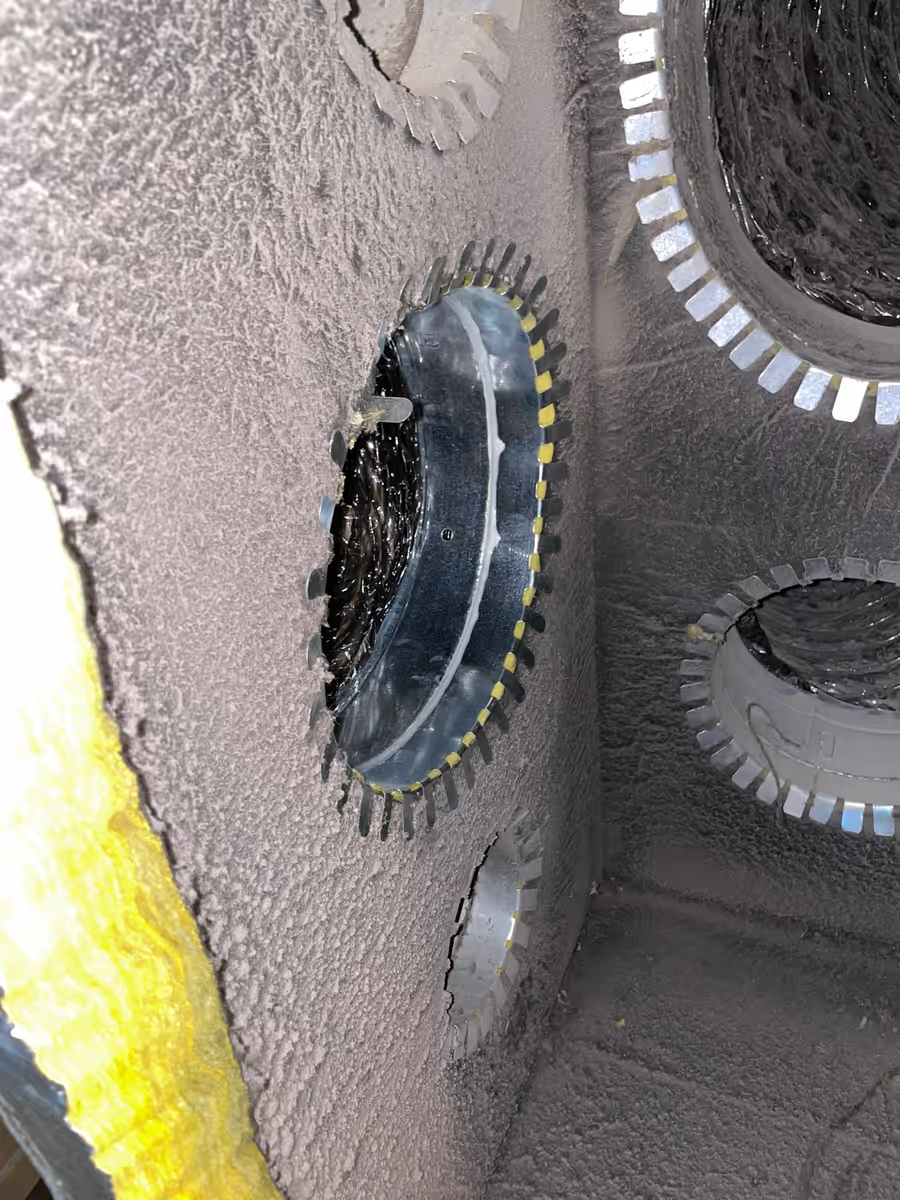
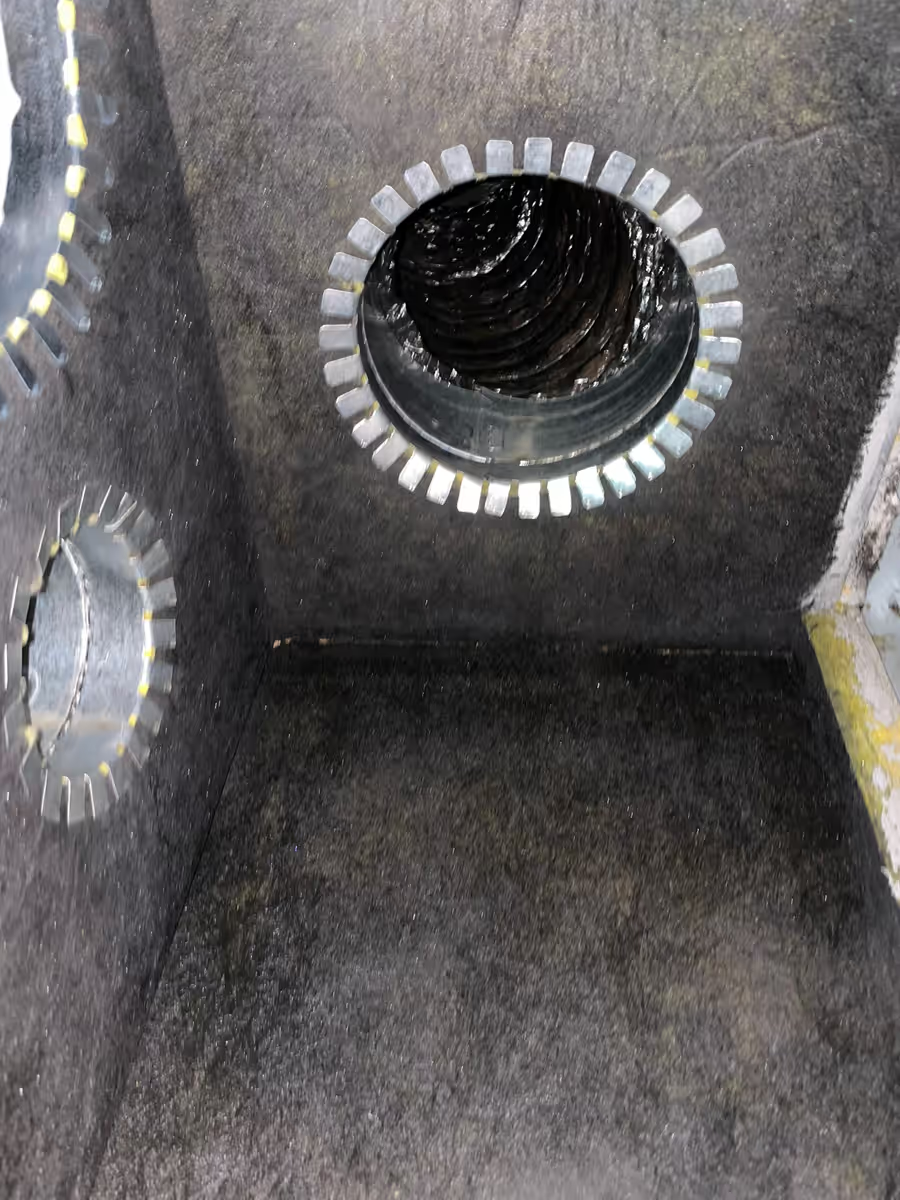
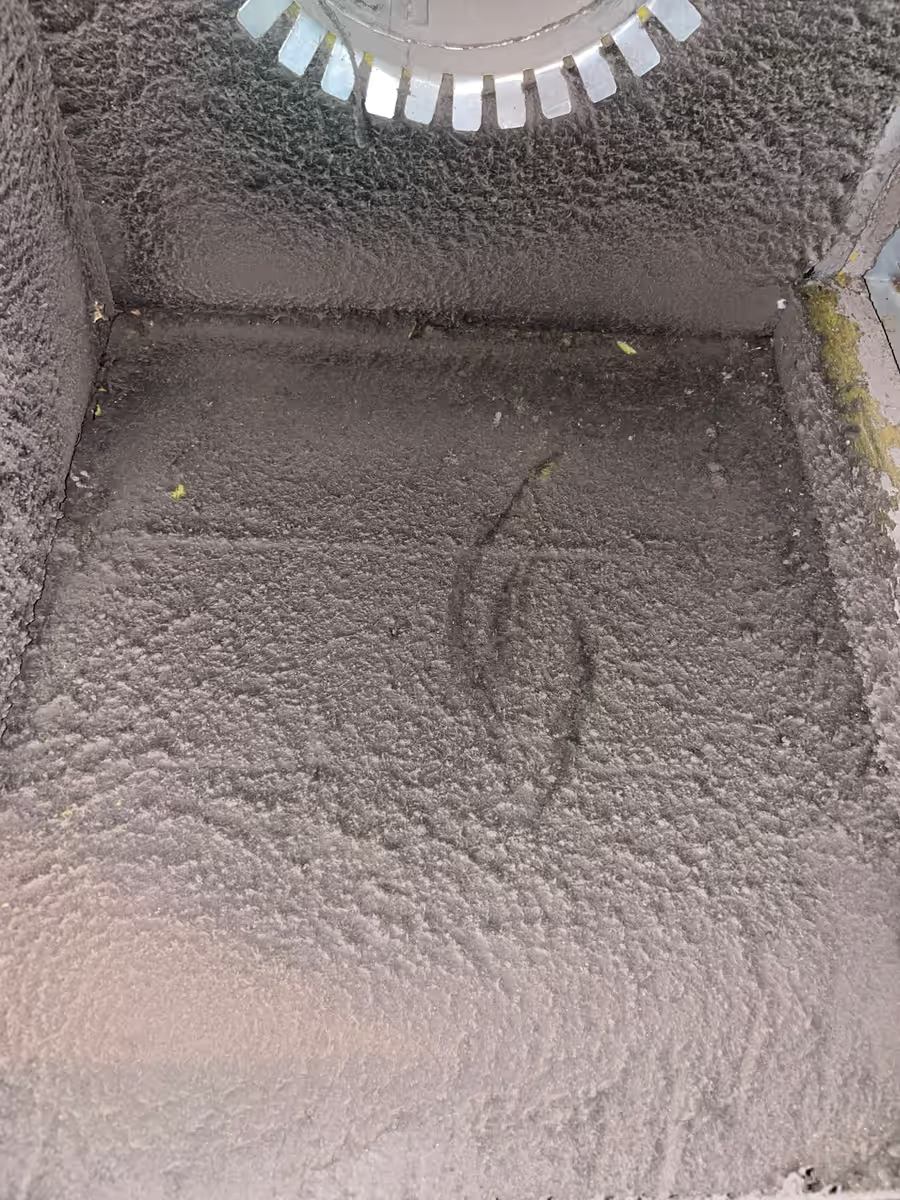
- Photograph the condition, with a date. The inside of the return, the supply registers, the air handler closet floor, and the filter you pulled out. A photograph of a plenum is worth more than a paragraph describing it.
- Put it in writing and keep a copy. Email or text, so the date is not in dispute.
- Ask for an inspection rather than a service. A technician who opens the plenum and shows you what is inside produces a finding both sides can read. That is how our own jobs start — an inspection you watch, and if the system is already clean, we say so and leave.
Single-family homes and duplexes are different
The last sentence of section 83.51(1) matters if you rent a house: the landlord's obligations under that subsection may be altered or modified in writing with respect to a single-family home or duplex. A lease on a house can therefore assign more of the HVAC maintenance to the tenant than a lease on an apartment can. Read the lease before you read the statute.
If you are in a condo, there is a third party
Condo buildings add an association whose declaration divides the building between unit and common elements, and the ductwork can fall on either side of that line depending on the building. It is the same structure as the question of who cleans the dryer vents in a condo — the answer lives in the declaration, not only in the lease.
The practical answer
For an apartment or condo in South Florida: the system is the landlord's, the operating habits are the tenant's, and the fight is almost always about which one produced the condition. Establish that with photographs and an inspection, in writing, before anybody argues about the statute.
If you need someone to open the system and document what is actually in it, that is where our air duct cleaning work starts — with an inspection you watch, and an honest answer about whether the ducts are the problem.