A frozen AC is confusing the first time it happens: the system is running, you can hear it, and the air coming out is warm. Sometimes there is water on the floor. The cause is almost always airflow, and there is something useful you can do in the next five minutes.
What makes an evaporator coil freeze?
Your evaporator coil gets cold — that is its job. Warm indoor air is supposed to move across it continuously, giving up its heat and its moisture. That constant flow of warm air is what keeps the coil surface above freezing while it does the cooling.
Restrict that airflow and the balance breaks. With too little warm air passing over it, the coil temperature keeps dropping until it falls below 32°F. The condensation that normally drips into the drain pan freezes on the coil instead. Ice builds, ice blocks even more airflow, and the problem accelerates until the coil is a solid block and no air gets through at all.
Two things cause it:
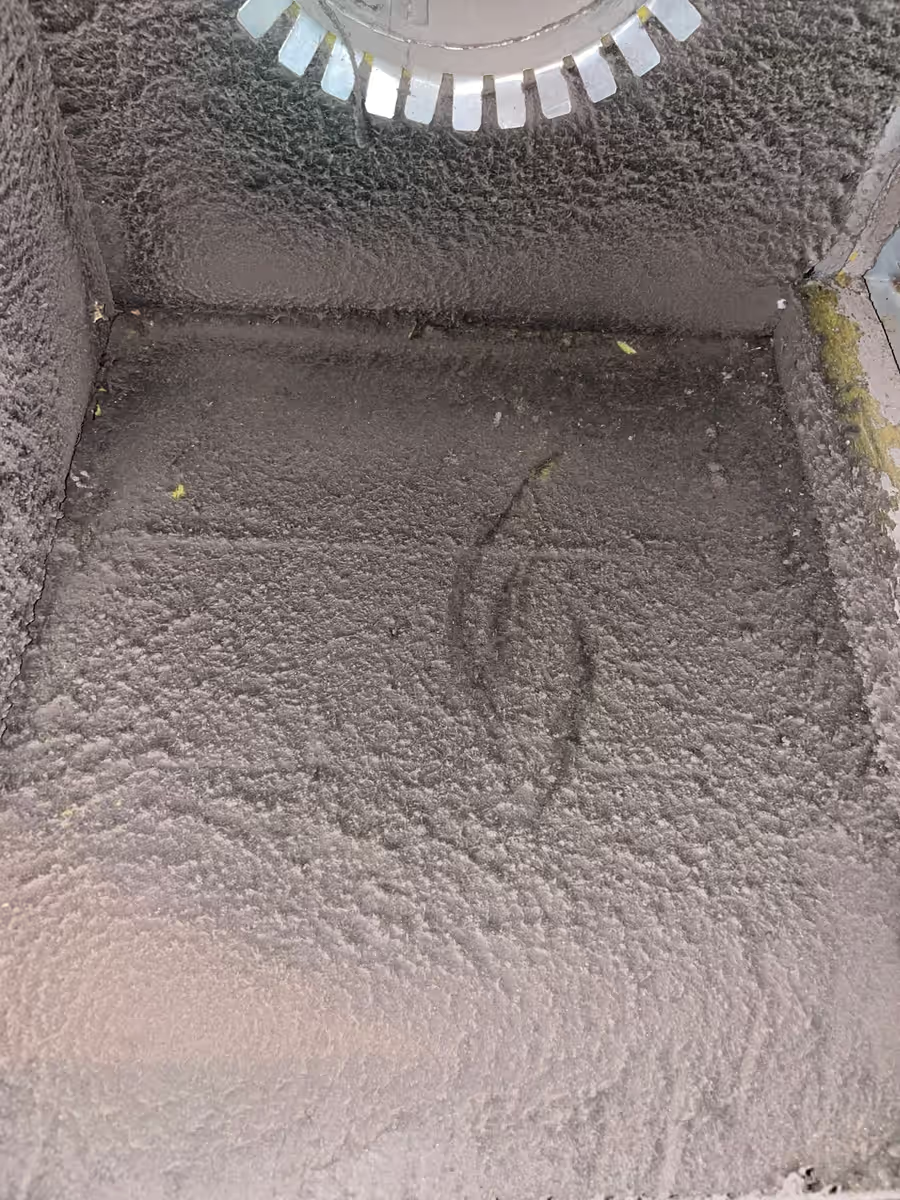
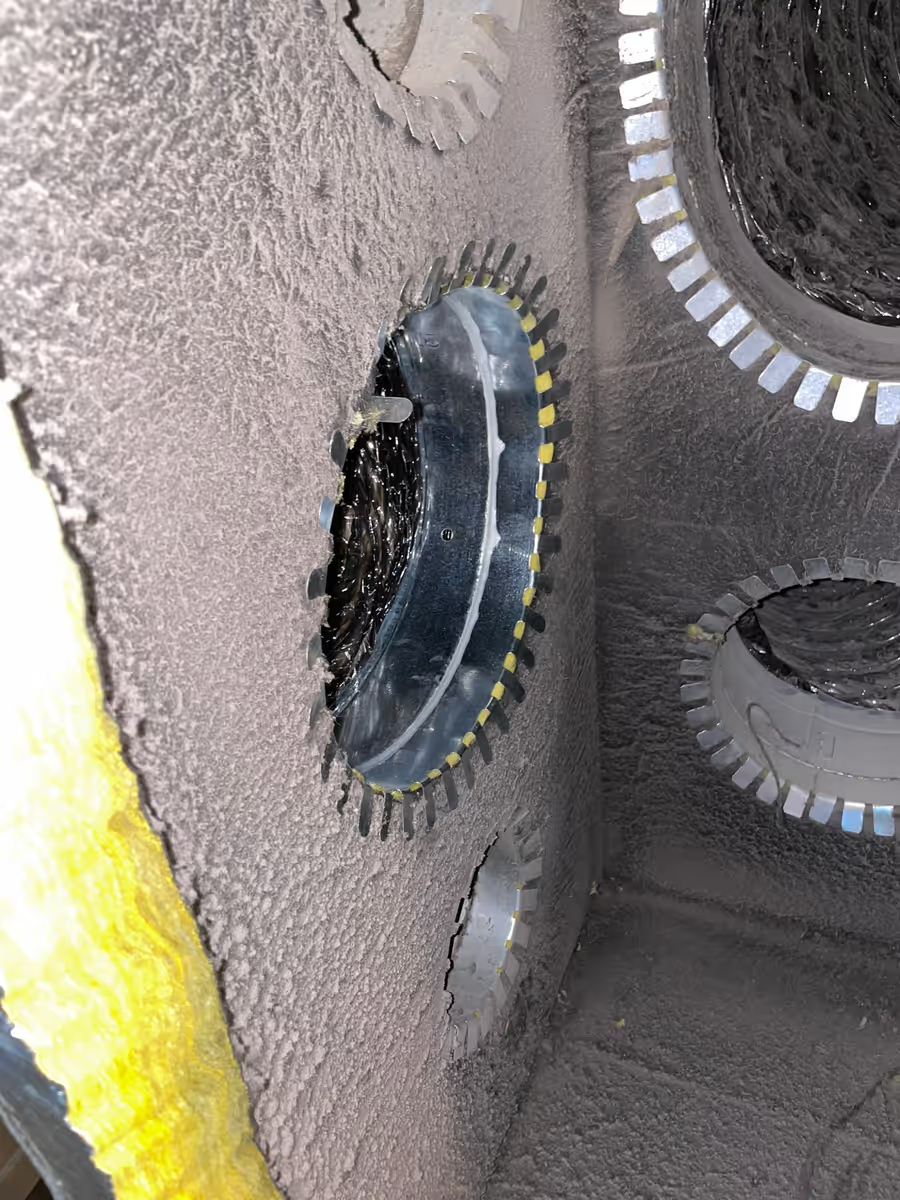
Restricted airflow — the common one. A clogged filter, a coil coated in dust and biofilm, a dirty blower wheel, closed or blocked supply vents, or a collapsed duct run. Anything that starves the coil of warm air.
Low refrigerant — the other one. A refrigerant leak drops pressure in the system, which drops the coil's operating temperature below where it was designed to run. This is a repair, not a cleaning, and it needs a technician with gauges.
What are the signs your AC is frozen?
- Warm air from the vents while the system runs and sounds normal
- Visible ice on the refrigerant line at the air handler, or on the coil itself if you can see it
- Weak airflow that faded over days before it stopped
- Water on the floor around the air handler — that is the ice melting and overwhelming the drain pan
- The system runs constantly and never satisfies the thermostat
If you saw airflow getting weaker over a week or two before this happened, that points at a restriction rather than a sudden refrigerant loss.
What should you do right now?
Four steps, in this order:
- Turn the cooling off at the thermostat. Set the mode to Off — not to a lower temperature. Running it longer makes the ice worse.
- Set the fan to On. Circulating room-temperature air across the coil thaws it faster than leaving everything off.
- Wait for it to thaw completely. Usually one to three hours. Put towels down if water is reaching the floor. Do not chip, scrape, or pick at the ice — the fins and lines bend and puncture easily.
- Change the filter while you wait, and open every supply vent in the house.
Once it is fully thawed, run the cooling again and watch it. If it cools normally and keeps cooling, a dirty filter was likely your whole problem. If it freezes again within a day, stop running it and have someone look at it — repeated freezing puts strain on the compressor, which is the expensive part of the system.
Why do South Florida coils get dirty enough to freeze?
Runtime and humidity, the same combination behind most HVAC problems here.
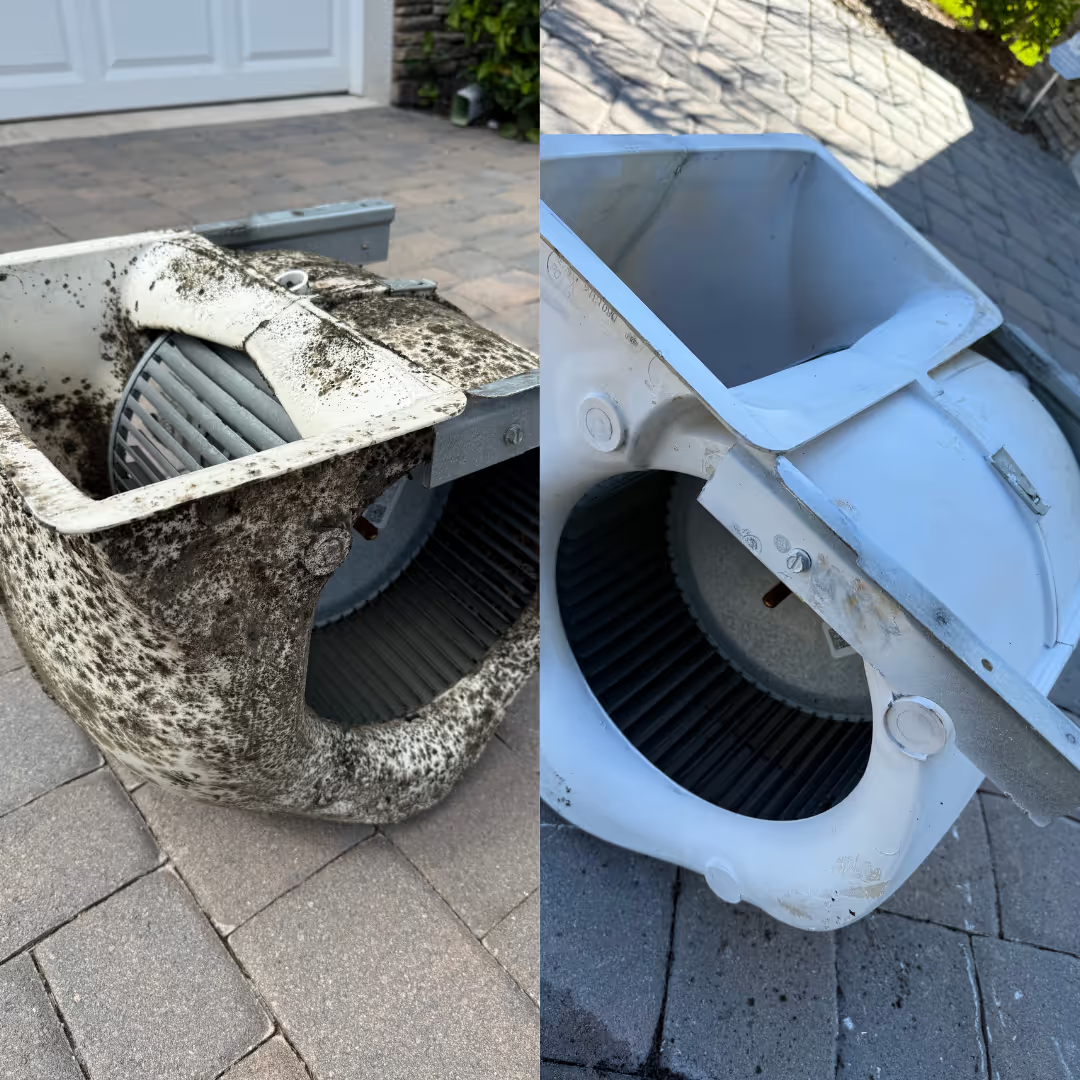
Our systems run close to year-round, which means far more air passes over the coil annually than in a climate with a real off-season. More air means more dust delivered to the coil surface. And because our coils are wet almost continuously, that dust does not blow off — it sticks, layers, and becomes a mat across the fins.
That mat does two things at once: it insulates the coil so heat transfer gets worse, and it blocks the gaps between the fins so less air gets through. Both push the system toward freezing. It is a gradual decline that ends abruptly the first time conditions tip it over — often on a cooler night, when the return air temperature drops.
The same buildup collects on the blower wheel, which is why a system that ices up often has a blower fan that needs attention too.
Is this a cleaning job or a repair?
Here is the honest split.
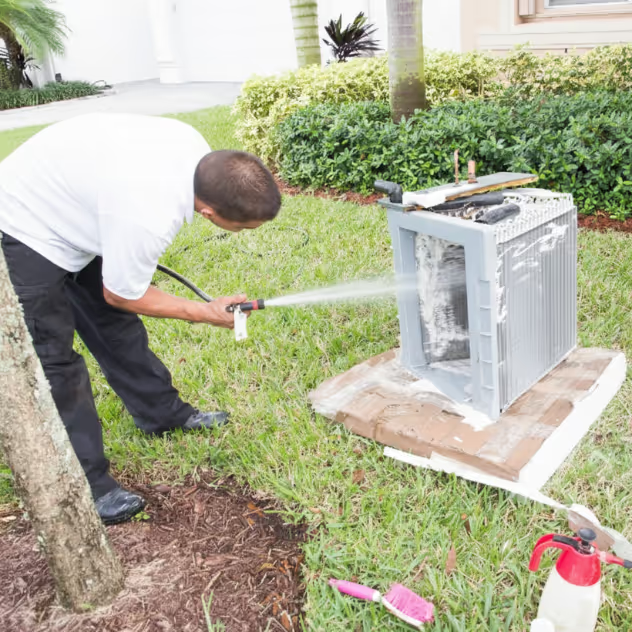
It is a cleaning job if the coil and blower are visibly dirty, the filter was overdue, airflow declined gradually, and the system cools fine after a thaw and a filter change for a while. AC coil cleaning restores the airflow and heat transfer the system was designed around, and it usually resolves the freezing along with the efficiency loss you were paying for.
It is a repair if the coil is clean and it still freezes, if you have had refrigerant added before, if there is oily residue near the line connections, or if it freezes again immediately after a thaw. Those point at a leak, and adding refrigerant without finding the leak just buys a few months. That is a job for a licensed AC contractor, not something duct or coil cleaning will fix.
A technician should be able to tell you which one you have by opening the air handler and looking. If you are in Miami-Dade, Broward, or Palm Beach, we will come look at it for free and show you the coil before recommending anything.